



Dull skin, dark spots, and uneven tone are among the most common complexion concerns dermatologists hear about. Vitamin C has long been a gold-standard ingredient for addressing these issues, prized for its ability to brighten, protect, and support collagen. But can a peel-off mask deliver the same benefits as a serum? The answer is more complicated than the packaging suggests.
This article examines what the science says about vitamin C for skin, how peel-off masks fit into that picture, and what dermatologists want you to know before adding one to your routine.
What Does Vitamin C Actually Do for Your Skin?
Vitamin C is an antioxidant that the skin naturally uses to defend against environmental damage. When applied topically, it can support collagen production, slow collagen breakdown, and interfere with tyrosinase, the enzyme that triggers pigment formation.
“By supporting collagen production and reducing collagen breakdown, vitamin C may help reduce fine lines, and by inhibiting tyrosinase, it may reduce uneven pigmentation from sun exposure,” says Dr. Erum Ilyas, a board-certified dermatologist at Schweiger Dermatology in King of Prussia, Pennsylvania.
Dr. Daniel Schlessinger, a board-certified dermatologist and LovelySkin Medical Director, adds that vitamin C also has anti-inflammatory effects. “Vitamin C reduces inflammation in skin, which is why it can help improve inflammatory skin conditions such as acne and rosacea,” he says. “Vitamin C also improves overall skin texture by promoting the production of collagen, a protein that provides your skin its structure.”
Not all vitamin C is equally effective, however. The gold-standard form is L-ascorbic acid, typically used at concentrations between 10% and 20%. A randomized controlled trial published in the Journal of Cosmetic Dermatology found that a topical treatment containing vitamin C, vitamin E, and raspberry leaf cell culture extract produced significant anti-aging and brightening effects. Dr. Ilyas notes that formulations combining L-ascorbic acid with vitamin E and ferulic acid are believed to be more potent, and most clinical evidence is built around this trio.
How Do Peel-Off Masks Compare to Serums?
Here is the uncomfortable truth about peel-off masks: the peeling action itself can undermine the benefits of any vitamin C they contain.
When a peel-off mask is removed, it strips away cells from the outermost layer of the skin. “This can irritate the skin leaving it red and sore,” says Dr. Jonquille Chantrey, a cosmetic doctor and skin expert. “It can also remove the natural oils that protect and lubricate the skin, leaving it irritated and dry.”
Dr. Penelope Tympanidis, a Harley Street skin expert and founder of Dermaperfect, warns that the primary danger is contact dermatitis from the chemicals and ingredients in these masks. “People’s skin can become red and itchy and in some extreme cases they can weep and the skin can even peel off,” she says. “It can take more than a week to heal, and if it happens you will need to see a dermatologist.”
This does not mean vitamin C cannot benefit your skin. It means peel-off masks may not be the best delivery system for it. If your goal is brightening and collagen support, a well-formulated serum is likely a safer and more effective choice.
What Ingredients Should You Look For in a Vitamin C Product?
If you want the benefits of vitamin C without the risks of peel-off masks, focus on serums or leave-on treatments. Here is what to look for:
-
L-ascorbic acid at 10% to 20% concentration: This is the form with the most clinical evidence behind it.
-
Vitamin E and ferulic acid: Combining these with vitamin C has been shown to reduce UV-induced damage more effectively than vitamin C alone. Research in Antioxidants has explored how these antioxidant combinations protect against environmental stressors.
-
Amber or opaque packaging: Light and oxygen degrade vitamin C quickly.
-
A clear, pale yellow color: Discard the product if it turns dark orange or brown, as it has likely oxidized and lost potency.
What Are the Risks of Peel-Off Masks?
Peel-off masks carry specific risks that are worth understanding before you use one.
-
Skin barrier disruption: The peeling motion can damage the outer layer of skin, leaving it more sensitive and prone to irritation.
-
Contact dermatitis: Chemicals and adhesives in the mask can trigger allergic reactions.
-
Vellus hair removal: Peeling can tear away fine facial hair, causing trauma to the skin.
-
Flare-ups of existing conditions: People with rosacea, eczema, or sensitive skin are especially vulnerable.
-
Temporary results: Any brightening effect is often short-lived, and the damage may outweigh the benefit.
How Else Can You Achieve Glowing Skin?
If your goal is a brighter, more even complexion, there are safer and more effective approaches than peel-off masks.
-
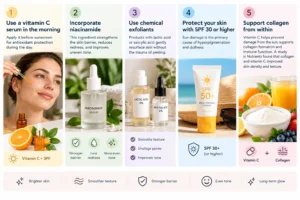
Use a vitamin C serum in the morning: Apply it before sunscreen for antioxidant protection during the day.
-
Incorporate niacinamide: This ingredient strengthens the skin barrier, reduces redness, and improves uneven tone.
-
Use chemical exfoliants: Products with lactic acid or salicylic acid gently resurface skin without the trauma of peeling.
-
Protect your skin with SPF 30 or higher: Sun damage is the primary cause of hyperpigmentation and dullness.
-
Support collagen from within: According to the American Academy of Dermatology, vitamin C works as an antioxidant to help prevent damage from the sun, support collagen formation, and support immune function. A randomized controlled trial published in Nutrients found that dietary supplementation with collagen and vitamin C improved skin density and texture.
Frequently Asked Questions
Do peel-off masks actually brighten skin?
Any brightening effect is usually temporary. The peeling action can irritate the skin, and the vitamin C may not penetrate deeply enough to deliver lasting results.
Can I use a vitamin C peel-off mask if I have sensitive skin?
Dermatologists recommend caution. If you have rosacea, eczema, or reactive skin, peel-off masks are more likely to cause irritation than benefit.
What is the best form of vitamin C for brightening?
L-ascorbic acid at 10% to 20% concentration, ideally combined with vitamin E and ferulic acid, has the strongest evidence for brightening and photoaging benefits.
How often should I use a vitamin C mask?
If you choose to use one, limit it to once per week at most. Stop immediately if you experience redness, itching, or burning.
Can vitamin C help with dark spots from acne?
Yes. Vitamin C helps fade post-inflammatory hyperpigmentation by inhibiting melanin synthesis. A serum is generally more effective than a peel-off mask for this purpose.
The Bottom Line
Vitamin C is a genuinely beneficial skincare ingredient, backed by decades of research. It can brighten skin, support collagen, and protect against environmental damage. But peel-off masks are not the best way to deliver it. The peeling action can irritate the skin, disrupt the barrier, and trigger contact dermatitis, especially in sensitive skin types.
If you want the benefits of vitamin C, choose a well-formulated serum with L-ascorbic acid and use it consistently. Pair it with sunscreen, niacinamide, and a diet rich in vitamin C foods. Your skin will thank you for the gentler approach.