

A Complete Guide for Healthy Skin and Hair
There is nothing quite like the feeling of a refreshing dip on a warm day. The crisp water, the laughter, the sense of weightlessness—it is pure summer joy. But that joy often comes with an unwanted souvenir: the lingering smell and feel of chlorine.
Chlorine is essential for keeping pools safe and free from harmful bacteria. However, it can be harsh on your skin and hair, stripping away natural oils and leaving you feeling dry, itchy, and less than your best. The good news is that removing chlorine doesn’t have to be a struggle. With the right approach, you can enjoy the water and step out feeling fresh and healthy.
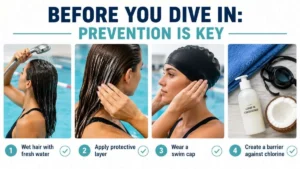
The battle against chlorine starts before you even enter the water. A little preparation can significantly reduce the amount of chlorine your skin and hair absorb.
-
Wet your hair with fresh water first. Hair acts like a sponge. If it is already saturated with clean water, it has less room to soak up chlorinated pool water.
-
Apply a protective layer. Consider using a swimmer’s conditioner or a light coat of coconut oil on your hair and skin to create a barrier against chlorine.
-
Wear a swim cap. This is one of the most effective ways to protect your hair, especially for frequent swimmers or those with color-treated hair.

Step 1: Rinse Immediately

The moment you step out of the pool, the clock starts ticking. The longer chlorine sits on your skin and hair, the more damage it can do.
-
Rinse with lukewarm water. Use the poolside shower as soon as possible. Lukewarm water is ideal—hot water can further dry out your skin.
-
Focus on your hair and skin. Give yourself a thorough rinse to wash away the majority of chlorine before it has a chance to settle in.
-
Rinse your swimsuit too. Don’t forget your suit. Rinse it with cold, clean water to prevent chlorine from breaking down the fabric and fading the colors.
Step 2: Wash with the Right Products

A quick rinse is a great start, but to truly neutralize and remove chlorine, you need the right cleansers.
-
Use a swimmer-specific or clarifying shampoo. Regular shampoo isn’t always enough. Products like UltraSwim Chlorine Removal Shampoo and TRISWIM Chlorine Removal Shampoo are formulated to break down and remove chlorine, minerals, and hard water buildup. For a comprehensive solution, the Malibu C Swimmers Wellness Shampoo and Conditioner Set is another excellent option that removes chlorine, copper, and other pool elements while gently cleansing and conditioning.
-
Follow with a rich conditioner. Chlorine strips moisture, so it’s crucial to replenish it. Use a deep conditioning treatment or a swimmer-specific conditioner to restore softness and shine.
-
Wash your body with a gentle cleanser. Use a mild, moisturizing body wash to cleanse your skin without stripping away its natural oils. TRISWIM Chlorine Fighting Body Wash is specifically formulated for swimmers to remove chlorine and salt water while soothing dry, itchy skin.
Step 3: DIY and Natural Remedies

For those who prefer a more natural approach, there are effective home remedies that can help neutralize chlorine.
-
Vitamin C is a powerful neutralizer. Vitamin C (ascorbic acid) is scientifically proven to neutralize chlorine. You can find it in specialized after-swim sprays like SwimSpray , which uses vitamin C to immediately neutralize chlorine on your skin and hair.
-
Try an apple cider vinegar rinse. Mix a capful of apple cider vinegar with a cup of water. After shampooing, pour this mixture over your hair, leave it for 1-3 minutes, and then rinse. It helps to restore your scalp’s pH balance and remove buildup.
Step 4: Moisturize and Replenish

After you have cleansed, it is time to put back what chlorine took away.
-
Apply a high-quality moisturizer immediately. The American Academy of Dermatology recommends applying a moisturizer right after showering to lock in hydration.
-
Use a thick, fragrance-free lotion. This is especially important if you have sensitive skin or conditions like eczema. Look for ingredients like hyaluronic acid, shea butter, or ceramides.
-
Don’t forget your hair. Apply a leave-in conditioner or a few drops of hair oil to damp hair to seal in moisture and prevent brittleness.
Quick Answers to Common Questions
How soon should I rinse after swimming?
Immediately. The sooner you rinse, the less time chlorine has to bind to your skin and hair proteins.
Can I just use regular shampoo to remove chlorine?
Regular shampoo can help, but it is not as effective as a swimmer-specific or clarifying shampoo, which is designed to break down and remove chlorine and mineral buildup.
What is the best way to remove chlorine from my skin?
Rinse immediately, wash with a gentle body wash, and then apply a rich moisturizer. For a deeper clean, use a vitamin C-based body wash or spray.
Does apple cider vinegar really remove chlorine?
Yes, an apple cider vinegar rinse can help remove chlorine and mineral buildup from your hair, restoring its natural shine and pH balance.
How does Vitamin C help with chlorine removal?
Vitamin C neutralizes chlorine through a chemical reaction, effectively deactivating it so it can be easily rinsed away.
Can chlorine cause long-term damage to my hair and skin?
Frequent, unprotected exposure can lead to chronic dryness, brittle hair, color fading, and even fine lines and wrinkles on the skin. However, consistent protection and aftercare can prevent this damage.
Is it bad to leave chlorine on my skin?
Yes, prolonged exposure can cause dryness, irritation, and rashes. The CDC notes that chlorine can strip natural oils and lead to irritant dermatitis. It is always best to remove it promptly.
For more information on protecting your skin, visit the American Academy of Dermatology’s public resources. For additional tips on swimmer’s hair care, see Healthline’s guide to chlorine and hair.