



If your grocery store’s rice aisle has ever left you staring at bags of white, brown, and jet-black grains wondering which one is actually worth buying, you are not alone. White rice has been the default for generations. It is affordable, cooks quickly, and pairs with nearly everything. But purple rice, also called black rice or forbidden rice, has been steadily earning a reputation as a nutritional powerhouse.
The question is not simply which one tastes better. It is which one delivers more of what your body actually needs. Here is how the two compare, backed by research, so you can make an informed choice for your next meal.
What Makes Purple Rice Different?
The key difference between purple rice and white rice comes down to processing. White rice is a refined grain. During milling, the bran and germ layers are stripped away, leaving only the starchy endosperm. That process removes a significant portion of the grain’s natural fiber, vitamins, and minerals, according to Verywell Health.
Purple rice is a whole grain. It retains its bran and germ, which is where most of the nutrients live. The grain’s deep color comes from anthocyanins, the same antioxidant pigments found in blueberries and blackberries. These compounds give purple rice its distinctive appearance and many of its health advantages.
Fiber and Protein: A Clear Difference
Fiber is one of the most meaningful nutritional gaps between the two grains. A serving of black rice provides about 1.9 grams of fiber, while white rice offers less than 0.75 grams, according to Verywell Health. That may not sound dramatic, but fiber slows digestion, supports gut health, and helps you feel full longer.
Protein content is slightly higher in purple rice as well, at 3.4 grams per serving compared to 3.2 grams in white rice. The difference is small, but for anyone tracking macros or eating a plant-forward diet, it adds up over time.
Antioxidants: Where Purple Rice Pulls Ahead
This is where purple rice truly distinguishes itself. The anthocyanins responsible for its color are powerful antioxidants that help protect cells from oxidative stress and inflammation. Research published in Frontiers in Nutrition highlights that black rice offers potent antioxidant, anti-inflammatory, and cardiovascular protective effects due to its high anthocyanin content.
White rice, having lost its bran and germ during milling, contains negligible amounts of these protective compounds. Choosing purple rice is a simple way to increase your daily antioxidant intake without overhauling your entire diet.
Glycemic Index: A More Nuanced Picture
White rice has a high glycemic index, meaning it can cause rapid spikes in blood sugar, especially when eaten alone in large portions. Purple rice generally scores lower, though the picture is more complex than many people assume.
Research from the International Rice Research Institute cautions that grain color alone does not reliably predict blood sugar impact. In a study of 384 whole grain rice varieties, GI values ranged from approximately 60 to over 90, with substantial overlap between pigmented and non-pigmented groups. The key factor is starch structure inside the grain, not external color.
The practical takeaway: purple rice is generally a better choice than white for blood sugar management, but portion size, cooking method, and variety still matter.
Heart Health and Chronic Disease Support
The combination of fiber and anthocyanins in purple rice supports cardiovascular health. Fiber helps lower LDL cholesterol, while anthocyanins reduce inflammation in blood vessels. Animal models have demonstrated a 22% reduction in LDL cholesterol due to these mechanisms, according to the Frontiers in Nutrition review.
A systematic review of randomized controlled trials published in Current Nutrition Reports found that pigmented rice consumption was associated with reductions in fasting glucose, weight, and diastolic blood pressure. The researchers noted that more high-quality trials are needed, but the early evidence is promising.
What About Taste and Texture?
Switching from white to purple rice is a sensory adjustment. Purple rice has a nutty, slightly earthy flavor and a firmer, chewier texture. It does not disappear into a dish the way white rice does. For grain bowls, stir-fries, and salads, that texture is a welcome change. For dishes where rice is meant to be neutral, it may not work as well.
How to Cook Purple Rice
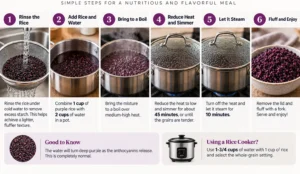
Cooking purple rice is straightforward, though it takes longer than white rice. Ralston Family Farms recommends combining 1 cup of rice with 2 cups of water, bringing it to a boil, then reducing heat and simmering for about 45 minutes. Let it steam for 10 minutes before fluffing. If using a rice cooker, use 1-3/4 cups water and select the whole-grain setting.
The water will turn deep purple as the anthocyanins release. This is completely normal. Rinsing the rice before cooking helps achieve a lighter, fluffier texture.
Where to Buy Purple Rice in the US
Purple rice is increasingly available at major American retailers and online:
-
Lundberg Organic Black Pearl Rice is available at H-E-B for around $5.98 for a 16-ounce bag. It is USDA Organic, Non-GMO Project Verified, and Certified Gluten-Free.
-
Ralston Family Farms Purple Rice is grown in Arkansas and available at Publix and other retailers.
-
Weee! Asian Market offers nationwide delivery of various black and purple rice brands.
Frequently Asked Questions
Is purple rice healthier than white rice?
For most people, yes. Purple rice contains more fiber, slightly more protein, and significantly more antioxidants. It also generally has a lower glycemic index.
Can purple rice help with weight management?
The higher fiber content promotes fullness, which may help control appetite. It is not a weight-loss miracle, but it is a more satisfying choice than white rice.
Does purple rice taste different from white rice?
Yes. It has a nutty, earthy flavor and a chewier texture compared to the soft, neutral taste of white rice.
Is purple rice gluten-free?
Yes. All rice is naturally gluten-free.
How does purple rice compare to brown rice?
Both are whole grains. Purple rice offers more antioxidants due to its anthocyanin content, while brown rice has a milder flavor and slightly different nutrient profile.
The Verdict
White rice is not the enemy. It is easy to digest, affordable, and culturally significant. But if you are looking for a nutrient-dense upgrade, purple rice is a compelling choice. It delivers more fiber, more antioxidants, and steadier energy in every bite. Make the swap for one meal this week. Your body might thank you.