
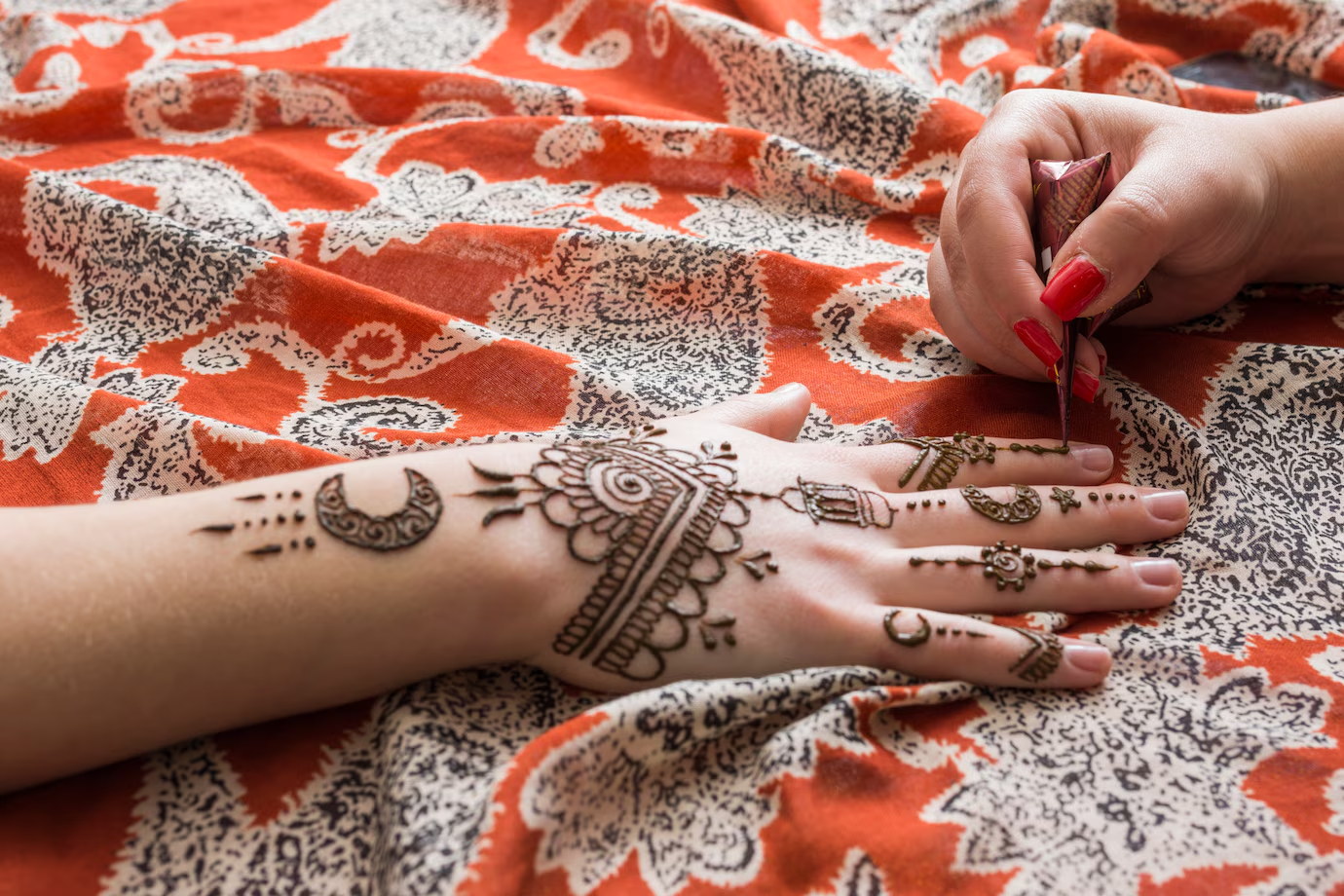
Mehndi, or henna, is a cherished form of body art celebrated for its beauty and cultural significance. However, achieving a deep, dark stain can sometimes be tricky. If you are looking for ways to enhance your mehndi’s color right at home, you have come to the right place. This guide explores effective hacks to darken mehndi, ensuring your designs stand out beautifully.
Understanding Mehndi Stains
The richness of a mehndi stain depends on several factors: the quality of henna used, your skin type, and how long the henna is left on. The active coloring agent in henna is lawsone, a molecule that binds to the keratin in your skin. The stain typically starts orange, deepens to brown, and can turn nearly maroon after two days as it oxidizes. While some achieve a deep stain easily, others may need a bit of extra help. Let us explore various hacks to help you achieve that rich, dark color you desire.
Hacks to Darken Mehndi at Home
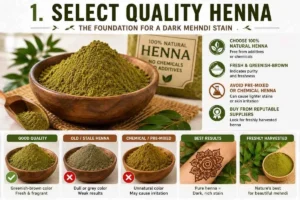
1. Select Quality Henna
The foundation for a dark mehndi stain begins with the quality of henna. Always choose 100% natural henna powder, free from additives or chemicals. Fresh henna powder should have a greenish-brown color, not dull or grey. Avoid pre-mixed or chemical-laden powders, as they can lead to lighter stains or skin irritation. Fresh henna yields the best results, so look for reputable suppliers that offer freshly harvested henna.
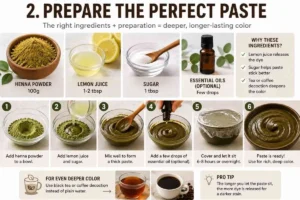
2. Prepare the Perfect Paste
The way you prepare your henna paste can significantly impact the final color. A good recipe includes:
-
Henna Powder: 100g
-
Lemon Juice: 1-2 tablespoons
-
Sugar: 1 tablespoon
-
Essential Oils (Optional): A few drops of eucalyptus or tea tree oil for enhanced color
Mix the henna powder with lemon juice and sugar to create a thick paste. The acidity in lemon juice helps release the dye, while sugar keeps the paste sticky and helps it adhere to the skin better. For even deeper results, use black tea or coffee decoction instead of plain water—the tannins naturally react with lawsone to intensify the color. Let the mixture sit for at least 6 to 8 hours or overnight for optimal dye release.
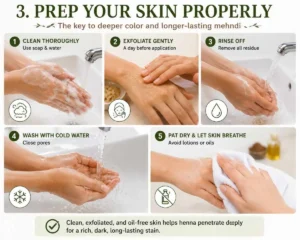
3. Prep Your Skin Properly
Before applying mehndi, prep your skin to ensure better color absorption. Clean the area with soap and water to remove oils, lotions, or dirt. For best results, exfoliate gently a day prior to application to help the henna penetrate the skin more effectively. Some experts recommend washing hands with cold water beforehand—the slight chill closes pores, allowing the lawsone pigment to bind more deeply once it begins oxidizing.
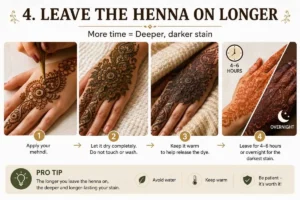
4. Leave the Henna on Longer
The longer you allow the mehndi to stay on your skin, the darker the stain will be. Aim for a minimum of 4 to 6 hours; however, if possible, keep it on overnight. While it may be tempting to remove it sooner, letting it sit for a longer period will yield significantly better results.
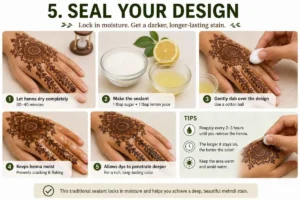
5. Seal Your Design
Sealing your mehndi design can enhance the color. After the henna has dried—typically around 30 to 40 minutes—apply a mixture of sugar and lemon juice to the design. This traditional sealant prevents the henna from cracking and flaking off too early, keeping it moist and allowing the dye to penetrate deeper into the skin. Simply mix one tablespoon of sugar with one tablespoon of lemon juice, and gently dab it over the henna using a cotton ball.

6. Use Heat to Your Advantage
Applying heat can help deepen the mehndi stain. You can use a hairdryer on a low setting, wrap the area with a warm towel, or sit in sunlight for a short while. The heat helps activate the dye, allowing it to penetrate deeper into the skin. For a traditional approach, hold your hands over a pan of heated cloves for 2 to 3 minutes—the fumes help oxidize the henna, deepening its tone into a rich brown.
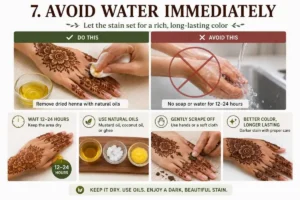
7. Avoid Water Immediately
After removing the dried henna, avoid washing the area with soap and water for at least 12 to 24 hours. The longer you can keep the area dry, the better the color will set. Instead of washing it off, scrape the dried paste off gently using mustard oil, coconut oil, or ghee. Water can lighten fresh stains, while natural oils not only remove residue but also enhance color and longevity.
8. Post-Care Matters
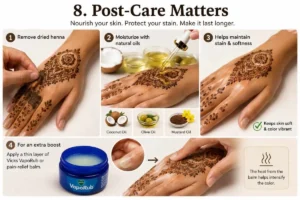
Once the henna is removed, keep the area moisturized to help maintain the stain. Applying natural oils like coconut, olive, or mustard oil can nourish the skin and help the color last longer. This is especially important in the first few days after application. For an extra boost, some people apply a thin layer of Vicks VapoRub or a pain-relief balm after removing the dried henna—the heat from the balm helps intensify the color.

9. Natural Enhancers
Consider incorporating natural ingredients that can enhance the color of your mehndi. Some options include:
-
Coffee: Brew a strong cup of coffee, let it cool, and use it to mix your henna paste.
-
Clove Water: Soak cloves in water overnight and use this water to mix with your henna for a darker stain.
-
Eucalyptus Oil: Apply before and after application to help the paste adhere and darken the stain.
10. Avoid Chemicals
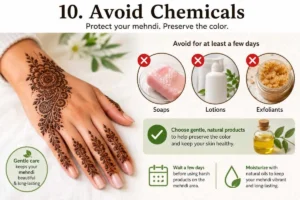
After applying mehndi, avoid products with harsh chemicals on the area. Steer clear of soaps, lotions, or exfoliants for at least a few days. Using gentle, natural products will help preserve the color.
Quick Reference Checklist
-
Use fresh, natural henna powder
-
Mix paste with lemon juice, sugar, and tea/coffee
-
Let paste rest for 6–8 hours for dye release
-
Clean and exfoliate skin before application
-
Apply thick, even layer of paste
-
Leave on for minimum 6 hours (overnight preferred)
-
Apply lemon-sugar sealant after drying
-
Use clove smoke or gentle heat for deeper color
-
Scrape off with oil, not water
-
Avoid water contact for 12–24 hours
-
Moisturize with natural oils afterward
-
Be patient—color deepens over 48 hours
Frequently Asked Questions
How long does it take for mehndi to darken?
Mehndi can take 24 to 48 hours to fully darken. The color deepens as the paste oxidizes, so patience is key.
What should I do if my mehndi stain is too light?
If the stain is too light, you can apply a fresh layer of henna and leave it on longer. Alternatively, natural color boosters like lemon-sugar sealant or clove oil can be used to enhance the stain.
Can I use pre-mixed henna cones?
Yes, but ensure they are made from natural ingredients. Many pre-mixed products contain chemicals like para-phenylenediamine (PPD) that can lead to lighter stains or severe skin irritation.
How can I remove mehndi if I want to?
While mehndi fades naturally, you can speed up the process by gently exfoliating with a scrub or using a mix of baking soda and lemon juice.
Is there a specific season that is best for mehndi application?
While you can apply mehndi year-round, warmer months often yield darker stains due to increased heat, which helps the dye absorb better. In colder weather, you may need to use additional warmth techniques like clove smoke or heated towels.
Can I apply mehndi on sensitive skin?
Yes, but always perform a patch test first. Natural henna is generally safe, but some people may be sensitive to essential oils or other additives.
Why does my mehndi turn orange instead of dark brown?
Mehndi naturally starts orange and darkens over 24 to 48 hours as it oxidizes. If it stays orange, you may have removed it too early, used low-quality henna, or exposed it to water too soon.
Achieving a rich, dark mehndi stain is a combination of quality henna, proper preparation, and attentive aftercare. By following these home hacks, you can enhance your mehndi experience and enjoy stunning designs that last longer. Embrace the art of mehndi, experiment with these tips, and celebrate the beauty of this traditional art form.
For more information on the science behind henna and skin safety, consult this scientific review on lawsone and skin health and these dermatologist-approved tips for safe cosmetic use.