


Dealing with greasy hair can be frustrating. Sometimes you are in a rush and do not have time for a full wash. Other times, you are trying to extend the time between washes to protect your hair’s natural moisture balance and preserve color treatments. Whatever the reason, managing greasy hair without washing is entirely possible with the right techniques.
Here is a comprehensive guide to keeping your hair fresh, clean-looking, and voluminous on days when shampoo is not an option.
Page Contents
Why Hair Gets Greasy
Hair becomes greasy when sebum, the natural oil produced by your scalp, builds up along the hair shaft. Sebum is essential for keeping hair moisturized and protected, but excess production can leave strands looking limp and oily. Factors like hormonal changes, over-washing, humidity, and using heavy styling products can all contribute to increased oil production.
Effective Dry Shampoo Alternatives
Dry Shampoo
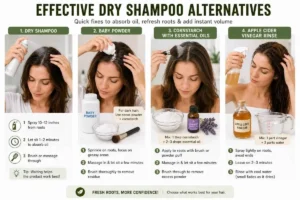
Dry shampoo is the most popular solution for managing greasy hair without washing. It works by absorbing excess oil and adding volume to the roots. For best results, hold the can about 10 to 12 inches away from your scalp and spray directly at the roots. Let it sit for one to two minutes to absorb oil, then brush or massage it through. This waiting period is crucial for the product to work effectively.
Baby Powder
Baby powder is an affordable and effective alternative to dry shampoo. Sprinkle a small amount directly onto your roots, focusing on the greasiest areas. Massage it gently into your scalp and let it sit for a few minutes. Brush thoroughly to distribute the powder and remove any white residue. For those with darker hair, consider using cocoa powder mixed with cornstarch for a tinted version.
Cornstarch with Essential Oils
Mix one tablespoon of cornstarch with two to three drops of your favorite essential oil, such as lavender or tea tree. This DIY dry shampoo absorbs oil effectively and leaves a pleasant scent. Apply the mixture to your roots with a makeup brush or powder puff, focusing on the oiliest sections. Massage it in, let it sit for a few minutes, and brush through.
Apple Cider Vinegar Rinse
Apple cider vinegar helps cut through grease and restore your scalp’s natural pH balance. Mix one part vinegar with three parts water in a spray bottle. Apply the solution lightly to your roots, avoiding the ends. Leave it on for two to three minutes, then rinse thoroughly with cool water. The vinegar smell dissipates as your hair dries. This method works best as a quick refresh rather than a heavy-duty oil remover.
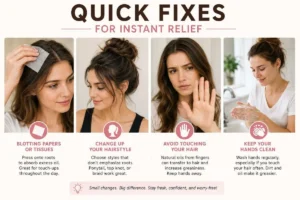
Quick Fixes for Instant Relief
When you are in a pinch and need immediate results, these methods can come to your rescue:
Blotting Papers or Tissues – Gently press blotting papers or paper towels onto your roots to absorb excess oil. This works surprisingly well for touch-ups throughout the day.
Change Up Your Hairstyle – Opt for styles that do not emphasize the roots. A sleek low ponytail, messy top knot, or textured braid can effectively disguise greasiness while looking intentional.
Avoid Touching Your Hair – The natural oils from your fingers can transfer to your hair and increase greasiness. Keep your hands away from your strands as much as possible.
Keep Your Hands Clean – Wash your hands regularly, especially if you tend to touch your hair often. Grease and dirt from your hands can exacerbate the issue.
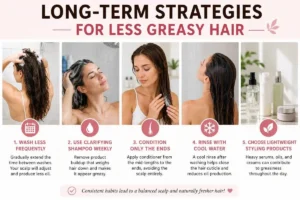
Long-Term Strategies for Less Greasy Hair
Managing greasy hair without washing becomes easier when you adopt these habits:
-
Wash less frequently – Gradually extend the time between washes. Your scalp will eventually adjust and produce less oil.
-
Use clarifying shampoo weekly – Remove product buildup that weighs hair down and makes it appear greasy.
-
Condition only the ends – Apply conditioner from the mid-lengths to the ends, avoiding the scalp entirely.
-
Rinse with cool water – A cool rinse after washing helps close the hair cuticle and reduces oil production.
-
Choose lightweight styling products – Heavy serums, oils, and creams can contribute to greasiness throughout the day.
Products That Help
Over-the-counter products designed for oily hair can make a significant difference:
-
Volumizing powders – These work similarly to dry shampoo but often provide more lift and hold.
-
Texturizing sprays – Add grit and texture that helps absorb oil while creating a lived-in style.
-
Oil-absorbing sheets – Designed for facial use but work well for quick hair touch-ups.
-
Scalp scrubs – Used weekly to exfoliate and remove buildup that contributes to excess oil.

What to Avoid
Certain practices can make greasy hair worse, even when using these methods:
-
Overusing dry shampoo – Build-up from frequent use can clog follicles and lead to scalp irritation.
-
Applying products to wet hair – This can trap moisture and create a greasy appearance.
-
Skipping scalp massage – Massaging your scalp while dry can stimulate oil glands and worsen the problem.
-
Using hot tools on oily hair – Heat can bake oils into the hair shaft, making them harder to remove.
Frequently Asked Questions
Can these methods truly get rid of greasy hair without washing?
They can manage the greasiness by absorbing excess oil and giving your hair a fresher appearance. However, these are temporary solutions. Proper washing is still necessary for long-term scalp health.
How frequently can I use dry shampoo or other products?
It is best not to rely on them excessively. Using them two to three times per week between washes is generally safe. Overuse can lead to product buildup and scalp issues.
Will these methods work for all hair types?
They can be effective for many hair types, but results may vary. Fine hair tends to respond well to dry shampoos and powders, while coarse or curly hair may require different approaches. Experimentation is key.
Can I apply these methods on colored or treated hair?
Dry shampoo, baby powder, and similar methods are generally safe for colored or treated hair. However, check product labels for any warnings and consult your stylist if you have concerns.
Are there any long-term consequences of not washing greasy hair?
Consistently leaving excess oil on the scalp without proper cleansing can potentially lead to issues like clogged follicles, itchiness, or scalp irritation. Regular washing remains essential for scalp health.
Can I use cornstarch instead of dry shampoo?
Yes, cornstarch is an excellent alternative. It absorbs oil effectively and is fragrance-free, making it suitable for sensitive scalps. Mix with a drop of essential oil if you prefer a scent.
Will vinegar rinse leave a smell?
The vinegar smell typically fades as your hair dries. You can add a few drops of essential oil to the mixture for a pleasant fragrance. Rinsing thoroughly helps minimize any lingering odor.
Managing greasy hair without washing is about finding the right balance between convenience and hair health. With these methods, you can confidently tackle greasiness on those days when washing is not an option while maintaining a fresh, clean look.
For more information on scalp health and proper hair care routines, consult this scientific review on scalp microbiome and hair health and these dermatologist-approved tips for maintaining healthy hair.