



You know the feeling. You step into the backyard, ready to plant a beautiful vegetable garden, only to hit rock-hard dirt, stubborn weeds, and a backache from bending over.
Enter the raised garden bed.
It is the ultimate gardening hack. By elevating your soil, you instantly solve problems like poor drainage, terrible native dirt, and pesky ground pests. Plus, it saves your back and knees. If you have been wanting to grow your own herbs and veggies but did not know where to start, building a raised bed is easier than you think. Here is exactly how to do it.
What You Will Need
Before you start building, gather your supplies. You can find everything at your local hardware store or online.

-
Lumber: The type of wood matters. Cedar is the gold standard because it is naturally rot-resistant and lasts for years. Redwood is also excellent. If you are on a budget, pine or fir works fine, but it will break down faster.
-
Hardware cloth: This is a metal mesh that lines the bottom. It keeps burrowing rodents like gophers and moles out of your veggies.
-
Landscape fabric: This weed barrier goes on top of the hardware cloth to stop weeds from growing up into your fresh soil.
-
Soil mix: Do not just use dirt from your yard. You need a fluffy, nutrient-rich blend of topsoil, compost, and a little bit of sand or peat moss for drainage.
-
Screws or nails: Make sure they are weather-resistant.
-
Plants: Choose herbs, vegetables, or flowers that thrive in your local climate.
Suggested Product:
-
Preparation: If you prefer not to cut wood yourself, pre-made kits like this one take the guesswork out of assembly.
Step-by-Step: Building Your Bed

1. Choose the Perfect Location
Find a spot that gets at least 6 to 8 hours of direct sunlight per day. Ensure the ground is relatively level. If water pools there after it rains, pick a different spot. Raised beds need excellent drainage.
2. Determine the Size
The golden rule of raised beds is width. Do not make it wider than 4 feet. This allows you to reach the center from both sides without stepping into the soil (which compacts it). The length is up to you. As for height, 12 to 24 inches is ideal for deep root growth and easy access.
3. Assemble the Frame
Cut your lumber to size. If you are using cedar, pre-drill your holes to prevent the wood from splitting. Screw the pieces together to form a sturdy box. For extra stability, add a support post at each inside corner.
4. Install the Pest Barrier
Flip the box over (or work from the bottom). Staple the hardware cloth to the bottom of the frame. This is your defense against pests.
5. Add the Weed Barrier
Lay the landscape fabric over the hardware cloth and staple it down. This ensures weeds cannot grow up through the bottom of your bed.
6. Fill It Up
Place the bed in its final location. Fill it with your soil mix. A great standard recipe is a mix of topsoil, compost, and a little potting soil. Leave about an inch of space at the top so water does not overflow.
7. Plant and Water
Plant your seedlings or seeds according to their specific instructions. Water them gently but deeply.
Pro Tips for a Thriving Garden
-
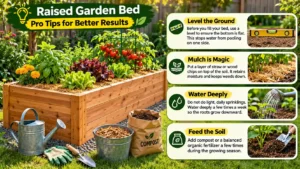
Level the ground: Before you fill your bed, use a level to ensure the bottom is flat. This stops water from pooling on one side.
-
Mulch is magic: Put a layer of straw or wood chips on top of the soil. It retains moisture and keeps weeds down.
-
Water deeply: Do not do light, daily sprinklings. Water deeply a few times a week so the roots grow downward.
-
Feed the soil: Add compost or a balanced organic fertilizer a few times during the growing season.
Frequently Asked Questions
What materials do I need to build a raised garden bed?
You will need lumber, hardware cloth for the bottom, landscape fabric to block weeds, soil mix, and screws. A saw and a drill will help with assembly.
What is the best location for a raised garden bed?
Look for a spot with at least 6 hours of direct sunlight and good drainage. Avoid areas near large trees that might hog the water and nutrients.
How tall should my raised garden bed be?
A height of 12 to 24 inches is common. This gives plant roots plenty of room to stretch out and saves you from bending over too far.
How much soil do I need to fill a raised garden bed?
Multiply the length by the width by the height (in feet) to find the cubic feet of soil needed. For example, a 4×8 foot bed that is 1 foot high needs 32 cubic feet of soil.
Do I need to put rocks at the bottom of a raised garden bed?
No. Rocks actually hurt drainage by creating a perched water table. Stick to hardware cloth and landscape fabric, then fill the whole bed with soil.




Can you be more specific about the content of your article? After reading it, I still have some doubts. Hope you can help me.