


Page Contents
The Golden Secret to Brighter Skin
You have probably seen it all over social media. Someone mixing bright yellow powder into a bowl, slathering it on their face, and emerging with glowing, radiant skin. It looks like magic. But this golden spice has been doing this for centuries, long before the internet existed.
Turmeric is not just for cooking. It has been a cornerstone of traditional skincare rituals for thousands of years, particularly in pre-wedding ceremonies where brides would apply turmeric pastes to achieve a luminous glow. The active compound responsible for its skin benefits is curcumin, which gives turmeric its vibrant color and its impressive anti-inflammatory and antioxidant properties.
This humble kitchen staple can do more for your complexion than many expensive serums. Let us explore how to use it safely and effectively.
What Makes Turmeric So Good for Your Skin
The science behind turmeric is compelling. Curcumin, the star compound, works in several ways to benefit your skin.
It calms inflammation. Inflammation is at the root of many skin issues, from acne to redness to premature aging. A 2024 review published in Clinical, Cosmetic and Investigational Dermatology highlighted curcumin’s significant potential in treating conditions like atopic dermatitis, psoriasis, and chronic wounds through its anti-inflammatory, antioxidant, and antimicrobial properties.
It fights bacteria. Acne is often caused by bacteria growing inside clogged pores. Research shows curcumin has antimicrobial properties that make it a promising candidate for treating acne. Healthline notes that turmeric’s antibacterial and anti-inflammatory properties may help reduce acne breakouts and calm existing blemishes.
It protects against damage. Turmeric is packed with antioxidants that neutralize free radicals, the unstable molecules that damage skin cells and accelerate aging. This protective effect helps keep your skin looking youthful and resilient.
It may help with dark spots. A study published in the D Y Patil Journal of Health Sciences found that homemade turmeric masks were effective in reducing chloasma faciei, a type of facial hyperpigmentation often called the “mask of pregnancy.” The study involved 100 women who applied turmeric masks every other day for two months, and the results showed significant improvement in skin discoloration. You can read the full study here.
It is worth noting that while these findings are promising, more research is still needed to fully understand how topical turmeric works on human skin.
Four DIY Turmeric Face Masks to Try at Home
These recipes use simple ingredients you probably already have in your kitchen. Each one targets different skin concerns.
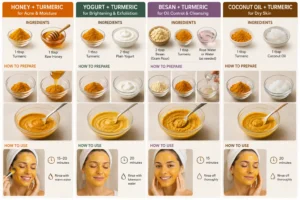
Honey and Turmeric for Acne and Moisture
Honey is naturally antibacterial and deeply moisturizing. When combined with turmeric, it creates a gentle yet effective mask for acne-prone skin that also needs hydration.
Mix one tablespoon of turmeric powder with one tablespoon of raw honey. Apply the mixture to clean skin, avoiding the eye area. Leave it on for 15 to 20 minutes, then rinse with warm water. Pat your skin dry gently. The honey soothes while the turmeric fights bacteria and reduces inflammation.
Yogurt and Turmeric for Brightening and Exfoliation
Yogurt contains lactic acid, which gently exfoliates dead skin cells. This helps turmeric penetrate more effectively and reveals brighter skin underneath.
Combine one tablespoon of turmeric with two tablespoons of plain yogurt. Apply evenly to your face and neck. Let it sit for 20 minutes, then rinse with lukewarm water. This mask is excellent for dull skin and uneven tone.
Besan and Turmeric for Oil Control and Cleansing
Besan, also known as gram flour or chickpea flour, is a traditional ingredient in South Asian skincare. It absorbs excess oil and provides gentle exfoliation.
Mix two tablespoons of besan with one tablespoon of turmeric. Add a splash of rose water or plain water to form a smooth paste. Apply to your face and leave it on for 15 minutes before rinsing off. This combination deeply cleanses pores and leaves skin feeling fresh. WebMD explains that turmeric has antioxidant, antiseptic, antibacterial, and anti-inflammatory properties, making it a powerful addition to any skincare routine.
Coconut Oil and Turmeric for Dry Skin
Coconut oil is rich in fatty acids that nourish and hydrate dry, flaky skin. Turmeric adds its brightening and soothing benefits.
Mix one tablespoon of turmeric with one tablespoon of coconut oil. Massage the blend onto your face in gentle circular motions. Leave it on for 20 minutes, then rinse thoroughly. This mask is particularly beneficial during colder months when skin tends to get dry.
Important Safety Tips Before You Apply
Turmeric is natural, but that does not mean it is risk-free. Here are some crucial precautions.
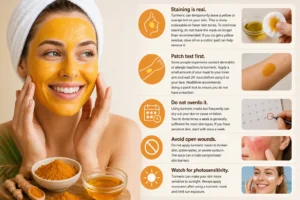
Staining is real. Turmeric can temporarily leave a yellow or orange tint on your skin. This is more noticeable on fairer skin tones. To minimize staining, do not leave the mask on longer than recommended. If you do get a yellow residue, olive oil on a cotton pad can help remove it.
Patch test first. Some people experience contact dermatitis or allergic reactions to turmeric. Apply a small amount of your mask to your inner arm and wait 24 hours before using it on your face. Healthline recommends doing a patch test to ensure you do not have a reaction.
Do not overdo it. Using turmeric masks too frequently can dry out your skin or cause irritation. Two to three times a week is generally sufficient for most skin types. If you have sensitive skin, start with once a week.
Avoid open wounds. Do not apply turmeric masks to broken skin, active rashes, or severe sunburn. The spice can irritate compromised skin barriers.
Watch for photosensitivity. Turmeric can make your skin more sensitive to sunlight. Always apply sunscreen after using a turmeric mask and limit sun exposure.
What to Look for When Buying Turmeric for Skincare
Not all turmeric powders are created equal. For face masks, you want the purest product possible.
Choose organic. Organic turmeric is grown without synthetic pesticides or fertilizers. This reduces your exposure to unwanted chemicals.
Look for high curcumin content. Curcumin is the active compound that delivers most of the skin benefits. Some varieties, like Lakadong turmeric, are known for their exceptionally high curcumin levels.
Consider Kasturi turmeric. Kasturi manjal, or wild turmeric, is a variety specifically used for skincare in traditional practices. It has a milder scent and is less likely to stain than regular culinary turmeric. You can find wild turmeric powder at iHerb.
Avoid additives. The ingredient list should say “turmeric” and nothing else. Avoid powders with anti-caking agents, preservatives, or artificial colors.
Frequently Asked Questions
How often should I use a turmeric face mask?
For most skin types, two to three times a week is ideal. If you have sensitive skin, start with once a week and gradually increase if no irritation occurs.
Will turmeric stain my skin permanently?
No. The yellow tint is temporary and usually fades within a few hours. Using a gentle oil-based cleanser can help remove any residue more quickly.
Can I use regular cooking turmeric for face masks?
Yes, but look for pure turmeric powder without additives. Kasturi or wild turmeric is often preferred for skincare because it is less staining and has a milder fragrance.
Can I add other ingredients to these masks?
Absolutely. Aloe vera gel can add extra hydration. A few drops of lemon juice can boost brightening effects, but be cautious if you have sensitive skin. Experiment to find what works best for you.
Can I store leftover mask for later use?
It is best to prepare these masks fresh each time. The ingredients can lose their potency and may breed bacteria if stored. If you must store leftovers, refrigerate and use within two to three days.
The Bottom Line
Turmeric is not a fleeting trend. It is a time-tested ingredient with genuine skin benefits backed by both tradition and emerging science. Its anti-inflammatory, antibacterial, and antioxidant properties make it a valuable addition to any natural skincare routine.
The key is using it wisely. Start slowly. Patch test. Do not leave masks on too long. And always follow up with sunscreen.
Your kitchen holds more skincare power than you might realize. That jar of golden powder in your spice rack could be the secret to the glow you have been looking for. Give it a try, and let your skin discover what centuries of tradition already knew.