



Your Phone Might Be Messing With Your Skin and Hair. Here’s What to Do About It.
That device in your pocket is a marvel of modern engineering. It connects you to the world, manages your schedule, and provides endless entertainment. But as it sits against your face during calls or rests in your hand for hours, it could be quietly affecting your skin and hair in ways you haven’t considered.
This isn’t about paranoia; it’s about awareness. Here is a science-backed look at how your phone might be impacting your appearance and, more importantly, what you can do to protect yourself.
The Bacterial Brew on Your Screen
Think about everywhere your phone goes. The kitchen counter, the gym, the office, and yes, even the bathroom. With every touch, you transfer oil, sweat, and a host of microorganisms to its surface.
-
A Breeding Ground: Studies have shown that cell phones can carry up to 10 times more bacteria than most toilet seats. This grime is a cocktail of skin cells, dirt, and environmental debris.
-
The Acne Connection: When you press this bacteria-laden screen against your cheek, you are directly transferring that buildup to your pores. This can lead to breakouts, irritation, and even conditions like folliculitis (inflamed hair follicles).
-
The “Cheek” Pattern: If you notice persistent acne or breakouts concentrated on one side of your face or along your jawline, your phone is a prime suspect. The constant pressure, friction, and heat from the device can also trap sebum and sweat against the skin, creating an ideal environment for acne-causing bacteria.
Blue Light: The Invisible Aggressor
The high-energy visible (HEV) light, commonly known as blue light, is what makes your screen bright and readable. While the sun is the primary source of blue light, the cumulative hours we spend staring at our devices have raised concerns.
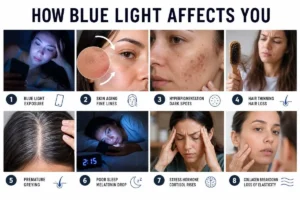
-
Skin Aging: Some research suggests that exposure to blue light can penetrate the skin more deeply than UV rays, potentially generating free radicals. This can lead to the breakdown of collagen and elastin, the proteins that keep skin firm and youthful, potentially accelerating the formation of fine lines and wrinkles.
-
Hyperpigmentation: Blue light can also stimulate the overproduction of melanin, leading to stubborn dark spots and uneven skin tone, particularly in those with darker skin types.
-
Hair and Sleep Disruption: The impact isn’t limited to skin. The same blue light that disrupts your sleep by suppressing melatonin production can have downstream effects. Poor sleep leads to increased cortisol, which can break down collagen and even contribute to hair thinning. Furthermore, some studies have linked excessive blue light exposure to an acceleration of genetic hair loss and premature greying.
The Physical and Psychological Toll
Beyond bacteria and light, the simple act of using your phone can have physical consequences.
-
“Tech Neck”: Constantly looking down at your phone strains the neck and can contribute to sagging skin and wrinkles on the neck and jawline over time.
-
Heat and Friction: The heat generated by your phone during long calls can irritate the skin and, combined with friction, can contribute to inflammation. For hair, this constant rubbing against the phone’s surface can lead to friction, making strands frizzy, dry, and prone to breakage.
-
Stress and Skin: Perhaps the most significant effect is indirect. The constant notifications and dopamine hits from our phones keep our nervous system on alert. This chronic stress raises cortisol levels, which triggers inflammation. Inflammation, in turn, accelerates the breakdown of collagen, leading to dull, tired-looking skin, adult acne, and rosacea flare-ups.
How to Protect Your Skin and Hair
The goal isn’t to throw your phone away, but to build healthier habits. Here’s a practical action plan:
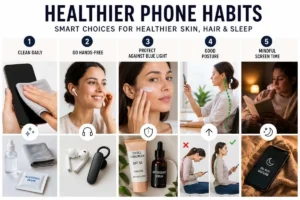
-
Clean Your Device Daily: This is the single most effective step. Use a microfiber cloth and a gentle screen cleaner or diluted alcohol wipes to remove the daily buildup of oil and bacteria.
-
Go Hands-Free: Use speakerphone, earbuds, or a Bluetooth headset for calls. This keeps the screen and its bacteria away from your face and reduces heat and friction against your cheek and hair.
-
Protect Against Blue Light: Lower the brightness on your devices. For skincare, consider using a tinted sunscreen or a moisturizer with antioxidants. Dermatologists note that sunscreens with iron oxide are the most effective at blocking visible light, including blue light.
-
Practice Good Posture: Hold your phone at eye level to avoid straining your neck and creating “tech neck.”
-
Be Mindful of Your Screen Time: Create boundaries. Avoid scrolling for at least an hour before bed to protect your sleep. The best skincare routine in the world can’t compete with a stressed-out nervous system and poor sleep.
Quick Answers to Common Questions
Can my phone actually cause acne? Yes. The bacteria, oil, and heat from your phone can clog pores and trigger breakouts, especially along the jawline and cheeks.
Is blue light from my phone as bad as UV rays from the sun? No. The intensity of blue light from screens is significantly lower than that of the sun. However, the cumulative exposure over many hours can still contribute to skin changes over time.
What’s the best way to clean my phone? Use a soft, lint-free cloth lightly dampened with a 70% isopropyl alcohol solution or a dedicated screen cleaner. Avoid getting moisture in any openings.
How does phone use affect my hair? Friction from the phone can cause breakage and frizz. Additionally, blue light exposure before bed disrupts sleep, which can negatively impact hair health and contribute to issues like thinning.
What ingredients should I look for in skincare to protect against blue light? Look for sunscreens with iron oxide, which provides a physical barrier against visible light. Also, antioxidants like vitamin C and vitamin E can help neutralize the free radicals generated by blue light exposure.
Does phone radiation damage skin? Current research on low-level radiofrequency (RF) radiation from phones is mixed. Some studies show minimal to no significant effects on skin cells, while others suggest potential heating effects. The more established concerns are bacterial, physical (heat/friction), and the indirect effects of blue light and stress.
Is there a link between screen time and premature aging? Yes. The combination of blue light degrading collagen, the physical strain of “tech neck,” and the stress and sleep disruption caused by constant connectivity can all contribute to signs of premature aging.
For more information on blue light and skin health, visit the Cleveland Clinic’s expert insights. For advice on daily hygiene habits, see Northwestern Medicine’s guide.