


The Midday Grease Struggle Is Real
You washed your hair this morning. It felt clean, light, and bouncy. By lunchtime, it looks like you skipped a week. The roots are flat. The shine is more oil than gloss. And you are already planning tomorrow’s wash.
If this sounds familiar, you are not alone. Oily hair is one of the most common hair frustrations people face. The good news is that you do not need to wash every day or rely on harsh products to fix it. With a few smart adjustments, you can keep your hair looking fresh longer and break the cycle of over-washing.
Why Your Hair Gets Greasy So Fast
Your scalp produces sebum, a natural oil that protects and moisturizes your hair and scalp. This is a good thing. Sebum keeps your strands healthy and prevents breakage. The problem starts when your scalp goes into overdrive.

Several factors can trigger excess oil production.
Genetics play a big role. Some people simply produce more sebum than others. You can thank your parents for that one.
Hormonal changes are another major culprit. Puberty, menstruation, pregnancy, menopause, and conditions like PCOS can all stimulate sebaceous gland activity.
Stress raises cortisol levels, which can indirectly amplify sebum secretion.
Your washing habits can backfire. When you wash your hair too frequently with harsh shampoos, you strip away natural oils. Your scalp senses this dryness and compensates by producing even more oil. It is a vicious cycle.
Product buildup also contributes. Heavy styling products with silicones and waxes coat the hair and trap oil against your scalp.
Environmental factors matter too. Humidity can make your scalp sweat and produce more oil.
Quick Fixes for Instant Relief
When you need a fast solution, these tricks work in minutes.
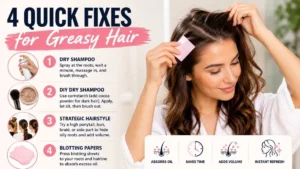
Dry shampoo is your emergency tool. It absorbs excess oil at the roots and adds volume. Spray it onto your roots, wait a minute for it to dry, then massage it in with your fingertips. Brush through to distribute evenly. Look for formulas with rice starch, which absorbs oil without leaving a chalky residue.
Make your own dry shampoo. If you run out of the store-bought version, cornstarch works beautifully. Mix it with a little cocoa powder if you have darker hair to avoid a white cast. Apply it to your roots with a makeup brush, let it sit for a few minutes, then brush it out thoroughly.
Try a strategic hairstyle. High ponytails, sleek buns, and textured braids hide greasy roots while looking polished. A side part can also disguise flat, oily hair by giving it instant volume.
Blotting papers are not just for faces. Those little sheets that absorb facial oil work on your scalp too. Press them against your roots and hairline to soak up excess shine.
Daily Habits That Actually Reduce Grease
Long-term control comes from changing how you care for your hair every day.
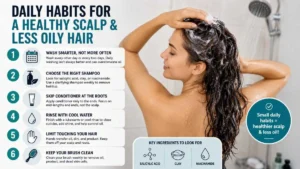
Wash smarter, not more often. The idea that you can “train” your scalp to produce less oil is a myth. But washing every day with harsh shampoos can stimulate more oil production. Try washing every other day or every two days. If your hair gets oily quickly, washing daily or every other day may be perfectly reasonable for your scalp type.
Choose the right shampoo. Look for shampoos with ingredients like salicylic acid, clay, or niacinamide, which help regulate sebum and exfoliate the scalp. Avoid heavy moisturizing shampoos, which can weigh down fine or oily hair. Clarifying shampoos used once a week can remove product and oil buildup.
Skip the conditioner at the roots. Apply conditioner only to the ends of your hair. The scalp does not need extra moisture, and conditioner on the roots will make your hair look greasy faster. Focus on the mid-lengths and ends, where your hair is older and drier.
Rinse with cool water. Hot water can stimulate oil glands. After you shampoo, finish with a lukewarm or cool rinse. This closes the hair cuticles, adds shine, and helps keep oil at bay.
Limit touching your hair. Your hands transfer natural oils, dirt, and product residue to your hair every time you touch it. Train yourself to keep your hands away from your scalp and roots.
Keep your brush clean. Brushes collect oil, product buildup, and dead skin cells. Clean your brush weekly by removing hair and washing it with warm, soapy water. A dirty brush transfers grime back onto your clean hair.
What to Look for in Hair Products
Some products work with your hair. Others make the problem worse.
Clarifying shampoos are useful but not for daily use. Use one once a week or every two weeks to remove buildup from styling products and hard water minerals.
Dry shampoos are lifesavers. They are the easiest way to extend your style. Apply them before your hair gets oily for best results.
Lightweight styling products are best. Gels, creams, and oils that are heavy will weigh your hair down and add to the greasy look. Choose mousses, sprays, or serums labeled “lightweight” or “oil-free.”
Avoid products with heavy silicones. Silicone gives hair a smooth, shiny finish, but it also builds up over time. This buildup traps oil against your scalp and makes your hair look greasy.
When to See a Professional
If your scalp feels itchy, heavy, flaky, sore, or congested, stretching wash days may not be doing you any favors. An oily scalp can sometimes indicate seborrheic dermatitis, a condition driven by excess sebum and an inflammatory response to a naturally occurring yeast on the skin. A dermatologist or trichologist can diagnose underlying conditions and recommend appropriate treatments.
Frequently Asked Questions
How often should I wash my oily hair?
Wash every other day or every two days if possible. If your hair gets oily very quickly, daily washing may be appropriate for your scalp type. The key is using the right shampoo.
What type of shampoo should I use for oily hair?
Look for clarifying, balancing, or oil-control shampoos with ingredients like salicylic acid, clay, or niacinamide. Avoid heavy, moisturizing formulas.
Should I use conditioner on oily hair?
Yes, but apply it only to the ends. Avoid the scalp and roots entirely to prevent adding extra oil.
Does brushing help or hurt oily hair?
Brushing distributes oil from your scalp down the hair shaft, which can make your hair look greasier. Limit brushing and use a clean brush.
Can stress make my hair oilier?
Yes. Stress raises cortisol levels, which can stimulate oil glands. Finding ways to manage stress may help reduce oil production.
Does water temperature matter?
Yes. Hot water stimulates oil glands. Use lukewarm or cool water when washing your hair to help control oil production.
Can overusing products make my hair greasier?
Yes. Too many products, especially applied to the scalp, can cause buildup and trap oil. Use products sparingly and avoid the scalp when possible.
The Bottom Line
Greasy hair is frustrating, but it is manageable. The key is balance. Wash just enough to keep your scalp clean without stripping it. Choose lightweight products that do not weigh your hair down. And pay attention to how your scalp feels between washes.
Start with one change, like switching to a clarifying shampoo or stretching your wash day by an extra day. Notice how your hair responds. Adjust as needed. With patience and consistency, you can keep your hair looking fresher, longer.