



That morning cup of black tea does more than just wake you up. Packed with antioxidants, caffeine, and tannins, this humble brew has been used for centuries as a beauty treatment. While drinking it offers internal health benefits, applying it topically can transform your skin and hair in ways you might not expect.
Here is what the science says about black tea for beauty and exactly how to use it.
The Science Behind Black Tea
Black tea comes from the Camellia sinensis plant, but unlike green tea, the leaves are fully oxidized. This oxidation process creates unique compounds called theaflavins and thearubigins. These give black tea its dark color and provide powerful antioxidant and anti-inflammatory properties.
Research shows black tea typically has lower levels of some polyphenols compared to green tea, but it is higher in theaflavins. These theaflavins help protect skin cells from UVB-induced damage, giving black tea a distinct advantage for sun protection.
Black Tea Benefits for Skin

Fights Free Radicals and Slows Aging
Black tea is rich in antioxidant polyphenols that neutralize free radicals, the unstable molecules that damage skin cells and accelerate aging. Studies demonstrate that black tea extract can reduce the number of sunburn cells caused by UV exposure and show anti-inflammatory, anti-oxidation, and antimicrobial activity.
Topical application of black tea has been shown to protect skin from UV-induced erythema, premature aging, and even skin cancer in laboratory settings. A 2025 study found that black tea extract effectively prevented UVB-induced oxidative and inflammatory damage in human skin cells, helping restore collagen production.
Soothes Acne and Irritation
Black tea contains tannic acid, a natural acne and bacteria fighter. Its anti-inflammatory properties can calm irritated skin, making it helpful for those struggling with breakouts or redness. The caffeine content also helps tighten skin and reduce puffiness.
Protects Against Blue Light
Emerging research suggests black tea extract shows anti-blue light efficacy, making it relevant for modern screen-heavy lifestyles.
Black Tea Benefits for Hair
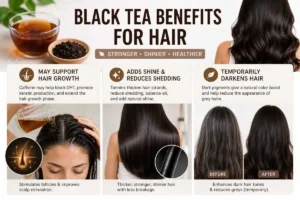
May Support Hair Growth
Black tea rinses are widely used to promote hair growth. The caffeine in black tea may block dihydrotestosterone (DHT), a hormone linked to hair loss. Test-tube studies show that topical caffeine application can increase keratin production and lengthen the hair growth phase.
Black tea also stimulates hair follicles by increasing blood circulation to the scalp.
Adds Shine and Reduces Shedding
The tannins in black tea can thicken hair strands, giving the appearance of a fuller mane. A black tea rinse helps reduce hair shedding and balances scalp oil, leaving hair shiny and manageable.
Temporarily Darkens Hair
Due to its dark pigment, black tea can give naturally dark hair a temporary color boost and help reduce the appearance of grey hairs. This works best on darker hair colors and is a short-term solution that washes out after a few shampoos.
How to Use Black Tea in Your Beauty Routine
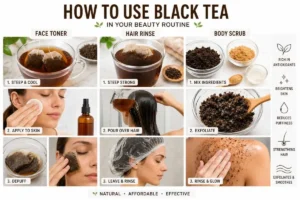
DIY Black Tea Face Toner
Ingredients: 2 black tea bags, 1 cup boiling water
Instructions:
-
Steep the tea bags in boiling water for 5–7 minutes.
-
Remove the bags and let the tea cool completely.
-
Dip a cotton ball into the cooled tea and apply to clean skin.
-
Leave on for 10–15 minutes, then rinse with lukewarm water.
Use this toner 2–3 times per week. For a de-puffing boost, chill used tea bags in the freezer for 20 minutes and gently rub them over your face to reduce puffiness.
Black Tea Hair Rinse
Ingredients: 3–5 black tea bags, 2 cups (500 ml) hot water
Instructions:
-
Steep the tea bags in hot water for 15–20 minutes for a strong brew.
-
Let the tea cool completely (about 30 minutes).
-
Wash your hair with shampoo and towel-dry lightly.
-
Pour the cooled tea over your hair, massaging it into the scalp.
-
Leave on for 20–30 minutes, covering with a shower cap.
-
Rinse thoroughly with cool water. Condition as usual.
Use once a week for best results.
Black Tea Body Scrub
Mix damp tea leaves (after steeping) with 3 tablespoons of sugar and a dash of coconut oil for an exfoliating body scrub.
Quick Answers to Common Questions
How often should I use black tea on my skin? For most skin types, 2–3 times per week is sufficient. Adjust based on how your skin responds.
Can I use black tea if I have sensitive skin? Always do a patch test first. Apply a small amount to your inner arm and wait 24 hours to check for any reaction.
Does black tea hair rinse work on all hair colors? It works best on naturally dark hair. Lighter hair colors may experience temporary staining.
Can I reuse brewed tea bags? Yes, you can refrigerate used tea bags for a day or two. Discard them after that to avoid bacterial growth.
Is drinking black tea as beneficial as applying it topically? Both have benefits. Drinking provides internal antioxidants, while topical application delivers compounds directly to skin and hair cells.
Does black tea help with dandruff? Its antimicrobial and anti-inflammatory properties may help soothe an irritated scalp, but scientific evidence is limited.
Are there any side effects? Black tea is generally safe for topical use. Avoid applying hot tea directly to skin to prevent burns. If you have a pre-existing scalp condition, consult a dermatologist first.
For more information on the science of tea and skin health, visit Paula’s Choice Ingredient Dictionary. For additional guidance on natural hair care, see Healthline’s guide to black tea for hair.




Your article helped me a lot, is there any more related content? Thanks!