



Page Contents
- Mustard Oil for Hair
- What Makes Mustard Oil Different
- Mustard Oil vs Coconut Oil for Hair
- Benefits of Mustard Oil for Hair
- Is Mustard Oil Good for Hair
- Side Effects of Mustard Oil on Hair
- Mustard Oil for Skin
- Does Mustard Oil Regrow Hair
- How Often to Apply Mustard Oil to Hair
- Best Ways to Apply Mustard Oil to Hair
- Frequently Asked Questions
- Final Thoughts
Mustard Oil for Hair
Mustard oil has been used in hair care for generations across many cultures. Pressed from the seeds of the mustard plant, this golden oil carries a sharp aroma and a warming sensation that sets it apart from other oils. While it is commonly known as a cooking ingredient, its role in hair care has gained attention far beyond the kitchen. People with thinning hair, dry scalps, or stubborn dandruff often turn to mustard oil as a traditional solution. This guide explores the real benefits, possible risks, and practical ways to use mustard oil for your hair. You will also find a direct comparison with coconut oil and answers to the most asked questions.
What Makes Mustard Oil Different
Mustard oil contains a compound called allyl isothiocyanate. This is the same substance that gives mustard its heat and pungent smell. When you massage the oil onto your scalp, this compound increases blood flow to the hair roots. Better blood circulation means more oxygen and nutrients reach the hair follicles. The oil is also rich in omega 3 and omega 6 fatty acids, which your body cannot produce on its own. Additionally, it carries vitamin E, a known antioxidant, and minerals like calcium and magnesium. This combination makes mustard oil a powerful choice for people struggling with weak or slow growing hair.
Mustard Oil vs Coconut Oil for Hair
The table below gives you a clear side by side comparison of these two popular oils. Use it to decide which one fits your hair type and needs.
| Feature | Mustard Oil | Coconut Oil |
|---|---|---|
| Texture | Thick and heavy | Light to medium |
| Smell | Strong, pungent, nutty | Mild, sweet, pleasant |
| Warmth on scalp | Produces noticeable heat | No warming effect |
| Best for hair type | Dry, coarse, or thick hair | All hair types, especially normal to oily |
| Main benefit | Stimulates blood flow for growth | Penetrates hair shaft to reduce protein loss |
| Dandruff control | Strong antifungal properties | Mild antifungal properties |
| Ease of washing out | Requires 2 to 3 shampoos | Washes out easily with one shampoo |
| Greasiness after use | High, can look oily for a day | Low to moderate |
| Protein content | Low | High |
| Shelf life at room temperature | 6 to 8 months | 2 to 3 years |
| Cost per ounce | Generally lower | Moderate |
Benefits of Mustard Oil for Hair
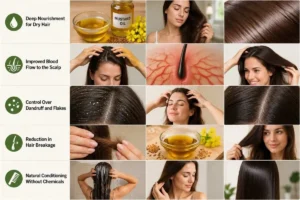
Deep Nourishment for Dry Hair
If your hair feels like straw and breaks easily, mustard oil can help. The fatty acids in the oil coat each strand, locking in moisture. Unlike lighter oils that evaporate quickly, mustard oil forms a protective layer that stays on your hair for hours. This is especially useful during dry winter months when indoor heating strips moisture from the air and from your hair.
Improved Blood Flow to the Scalp
The warming effect of mustard oil is not just a feeling. When you massage it into your scalp, the allyl isothiocyanate causes small blood vessels to expand. This brings fresh blood to the surface. Over several weeks of regular use, many people notice that their hair feels thicker at the roots. This does not mean new hair appears on bald spots. It means the existing hair becomes stronger and less likely to fall out.
Control Over Dandruff and Flakes
Dandruff is often caused by a yeast like fungus that lives on most scalps. Mustard oil has natural antifungal properties that can reduce this fungus without harsh chemicals. For best results, combine mustard oil with a gentle scalp massage. The massage lifts loose flakes, while the oil fights the underlying cause. Many users see a reduction in flakes within two to three weeks of weekly use.
Reduction in Hair Breakage
Weak hair breaks when you brush, style, or even sleep. Mustard oil strengthens hair by filling in the gaps along the hair cuticle. The oil’s thick consistency allows it to adhere to damaged areas. Over time, this reduces split ends and prevents breakage mid shaft. People who color or heat style their hair often find mustard oil helpful as a weekly repair treatment.
Natural Conditioning Without Chemicals
Store bought conditioners rely on silicones and synthetic polymers to make hair feel smooth. Mustard oil offers a natural alternative. It smooths the outer layer of each hair strand, reducing friction between strands. This means less tangling and fewer knots. Unlike chemical conditioners, mustard oil does not wash away completely with one rinse. A small amount stays behind, continuing to protect your hair until your next shampoo.
Is Mustard Oil Good for Hair
The answer depends on your hair type and your patience. For people with dry, thick, or coarse hair, mustard oil works very well. It provides the heavy moisture that these hair types need. For people with fine, thin, or oily hair, mustard oil can feel too heavy. It may leave your hair looking flat and greasy even after washing. The key is to match the oil to your specific situation. If you are unsure, start with a small amount. Use one teaspoon instead of two tablespoons. See how your hair responds before increasing the quantity.
Side Effects of Mustard Oil on Hair
No natural remedy is completely without risk. Mustard oil has several side effects that you should know before using it.
Allergic Reactions
Some people are allergic to mustard seeds or mustard oil. A reaction can include redness, swelling, or hives on your scalp. In rare cases, people experience difficulty breathing. Always do a patch test before your first full application. Place a small drop of oil on your inner elbow or behind your ear. Wait 24 hours. If you see no redness or itching, the oil is likely safe for you.
Scalp Irritation and Burning
The same warming compound that increases blood flow can also cause irritation. People with sensitive scalps may feel a burning sensation that does not go away after a few minutes. This is different from the mild warmth that most users feel. If the burning continues for more than five minutes after application, wash the oil off immediately. Do not try to wait it out.
Excessive Greasiness
Mustard oil is one of the heaviest oils used in hair care. It does not absorb completely into the scalp or hair shaft. A visible layer remains on the surface. This can transfer to your pillowcase, collars, and furniture. If you have an oily scalp already, adding mustard oil can make the problem worse by clogging hair follicles. Clogged follicles can lead to small bumps or even temporary hair shedding.
Strong and Lingering Odor
The smell of mustard oil is not subtle. It has been described as sharp, nutty, and slightly sulfuric. This odor can stay in your hair even after two shampoos. Some people enjoy the scent because it reminds them of traditional home remedies. Others find it unpleasant and difficult to remove. If you work in a close office or attend formal events, the smell may be a real concern.
Difficulty Washing Out
Unlike coconut or almond oil, mustard oil resists regular shampoo. You may need to shampoo two or even three times to remove all traces. Each shampoo strips natural oils from your hair along with the mustard oil. This can leave your hair dry and frizzy if you over wash. Some people solve this by using mustard oil only on the night before a rest day, so they have time to wash thoroughly without rushing.
Mustard Oil for Skin
The same oil that benefits hair also works for your skin. Here are the main uses.
Winter Moisturizer for Dry Patches
Mustard oil is thick enough to seal moisture into rough skin. Apply a few drops to elbows, knees, and heels. These areas have fewer oil glands and crack easily in cold weather. The oil sits on top of the skin, preventing water from evaporating. Unlike lotions that absorb quickly, mustard oil stays active for several hours.
Warming Massage Oil
Many massage therapists use mustard oil as a base for deep tissue work. The warming effect relaxes tight muscles faster than neutral oils. When mixed with a few drops of eucalyptus or peppermint oil, mustard oil becomes even more effective for sore shoulders and backs. Just remember that the smell is strong, so this is best for home use rather than a professional spa setting.
Lip Care for Chapped Lips
Cracked lips heal slowly because you constantly lick or eat throughout the day. A tiny drop of mustard oil applied before bed can speed up healing. The oil’s antibacterial properties prevent infection in deep cracks. By morning, the oil has absorbed and the lips feel softer. Do not use this if you have ever had an allergic reaction to mustard.
Does Mustard Oil Regrow Hair
This is the most common question, and the answer requires honesty. Mustard oil cannot regrow hair on completely bald areas where follicles have shut down permanently. Male pattern baldness, scarring alopecia, and advanced thinning do not reverse with any oil. However, mustard oil can help in two specific situations. First, if your hair is thinning due to poor scalp circulation, the warming effect may wake up sluggish follicles. Second, if your hair is breaking off before reaching its full length, the strengthening properties allow each strand to grow longer before falling out naturally. Think of mustard oil as a support tool, not a cure. It works best for people who still have active follicles and whose hair loss is recent, not long standing.
Here are a few places where you can buy mustard oil online:
-
Amazon – Punjas 100% Pure Mustard Oil, 25.36 oz
-
Walmart – Organic Unrefined Cold Pressed Mustard Oil, 4 oz
How Often to Apply Mustard Oil to Hair
For most people, once or twice per week is the right amount. Applying it daily will lead to buildup and greasiness. Applying it once every two weeks may not give you noticeable results. Stick to a regular schedule. Choose two fixed days each week, such as Tuesday and Saturday. Warm the oil slightly by placing the bottle in a bowl of hot water for two minutes. Do not microwave the oil, as high heat destroys some of the beneficial compounds. Massage into your scalp for five full minutes using your fingertips, not your nails. Leave the oil on for at least two hours. For deeper conditioning, leave it on overnight. In the morning, shampoo twice and condition as usual.
Best Ways to Apply Mustard Oil to Hair
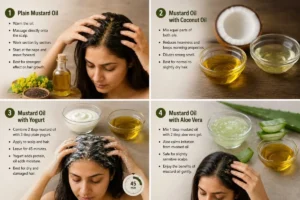
Plain Mustard Oil
Warm the oil and massage directly onto your scalp. Work section by section. Start at the nape of your neck and move forward. This method is best for people who want the strongest effect on hair growth.
Mustard Oil with Coconut Oil
Mix equal parts of both oils. This blend reduces the heaviness of mustard oil while keeping its warming properties. It also dilutes the strong smell. Use this mixture if you have normal to slightly dry hair.
Mustard Oil with Yogurt
Combine two tablespoons of mustard oil with three tablespoons of plain yogurt. Apply this paste to your scalp and hair. Leave for 45 minutes. The yogurt adds protein while the oil adds moisture. This is excellent for hair that is both dry and damaged.
Mustard Oil with Aloe Vera
Mix one tablespoon of mustard oil with two tablespoons of fresh aloe vera gel. The aloe calms any irritation from the mustard oil. This combination is safe for people with slightly sensitive scalps who still want the benefits of mustard oil.
Frequently Asked Questions
Is mustard oil safe for all hair types?
No. People with fine, thin, or already oily hair should use it sparingly or avoid it. People with dry, thick, or coarse hair benefit the most.
Can I leave mustard oil on my hair overnight?
Yes, but cover your pillow with an old towel. The oil will stain fabric. In the morning, shampoo thoroughly. Do not leave it on for more than 12 hours.
How do I remove the smell of mustard oil from my hair?
Shampoo twice using a clarifying shampoo. Follow with a conditioner that has a strong fragrance like mint or citrus. You can also rinse with diluted apple cider vinegar, which helps neutralize odors.
Can mustard oil help with dandruff?
Yes. Its antifungal properties reduce the yeast that causes dandruff. For best results, use it weekly for at least one month. Combine with a gentle scalp scrub to remove existing flakes.
Is mustard oil safe for children’s hair?
Generally yes, but with caution. Children have more sensitive scalps. Dilute mustard oil with an equal amount of coconut oil before applying. Leave it on for only 30 minutes, not overnight. Always do a patch test first.
Can I use mustard oil if I have color treated hair?
Yes, but be aware that the oil may cause your color to fade slightly faster. This is true of any heavy oil. If you want to protect your color, use a smaller amount and leave it on for less time.
What is the difference between mustard oil and essential oils?
Mustard oil is a carrier oil, meaning it is thick and made from pressed seeds. Essential oils are concentrated extracts that must be diluted. Never apply essential oils directly to your scalp. Mustard oil can be applied directly.
Can I heat mustard oil before applying it?
Yes, but do not overheat. Warm it by placing the bottle in hot water for two to three minutes. Do not boil it. Overheating destroys the beneficial fatty acids and can burn your scalp.
Does mustard oil cause hair fall?
No, not directly. However, if you are allergic to it or if you leave it on an already irritated scalp, the inflammation from the reaction can cause temporary shedding. Always do a patch test first.
How long until I see results from mustard oil?
Most people notice softer, less frizzy hair after two applications. For reduced dandruff, allow three to four weeks. For stronger hair with less breakage, allow two to three months of consistent weekly use.
Final Thoughts
Mustard oil is a traditional remedy with real science behind it. The warming compound increases blood flow. The fatty acids provide deep moisture. The antifungal properties fight dandruff. However, it is not for everyone. People with fine, oily hair may find it too heavy. Those with sensitive scalps may find it too irritating. The strong smell is another factor to consider. If you have dry, thick, or coarse hair and you want a natural way to improve strength and shine, mustard oil deserves a spot in your routine. Start slowly, watch how your hair responds, and adjust from there. No single oil works for every head of hair. Mustard oil works very well for those it suits.