




You do not need 90 minutes on a mat to feel the benefits of yoga. You do not need a studio membership, a fancy outfit, or a perfect sunrise backdrop.
You need 30 minutes. Maybe less on a busy day.
Research shows that even short yoga sessions can improve flexibility, reduce stress, and support cardiovascular health. The key is not duration. It is consistency and choosing the right style for your goals. Here are fifteen types of yoga you can complete in a 30-minute session, along with what each one does for your body and mind.
Why 30 Minutes Is Enough
Most people assume yoga requires an hour or more to be effective. That is a myth.
A 2019 study published in the International Journal of Yoga found that a 30-minute yoga session significantly reduced perceived stress and improved heart rate variability. Another study in Frontiers in Psychiatry showed that even brief daily practice improved emotional regulation and sleep quality.
The takeaway: short, consistent practice beats long, sporadic sessions. Every time.
15 Yoga Styles for a 30-Minute Session
| Yoga Style | Primary Benefit | Best For |
|---|---|---|
| Vinyasa Flow | Flexibility, strength, cardio | Those who want movement and sweat |
| Hatha | Strength, flexibility, mental clarity | Beginners and stress relief |
| Yin | Deep stretching, joint mobility | Tight hips, recovery days |
| Power Yoga | Muscle strength, weight management | Fitness-focused practitioners |
| Restorative | Stress relief, better sleep | High-stress lifestyles |
| Kundalini | Energy balance, focus | Mental clarity and vitality |
| Iyengar | Posture, alignment, injury recovery | Those recovering from injury |
| Bikram | Detoxification, flexibility | Heat lovers and endurance seekers |
| Ashtanga | Strength, stamina, discipline | Experienced practitioners |
| Anusara | Emotional balance, positivity | Heart-centered practice |
| Kripalu | Self-compassion, emotional healing | Stress and emotional release |
| Jivamukti | Spiritual connection, purpose | Mind-body-spirit integration |
| Sivananda | Holistic health, peace of mind | Complete mind-body practice |
| Aerial | Core strength, balance | Adventurous practitioners |
| AcroYoga | Trust, communication, strength | Partners and friends |
1. Vinyasa Flow Yoga
Vinyasa means “to place in a special way.” It is a dynamic practice where movement is synchronized with breath. In a 30-minute session, you can move through a complete flow that warms the body, builds strength, and calms the mind.

Benefits: Enhances flexibility, builds strength, improves cardiovascular health, promotes mindfulness.
Best for: Anyone who wants a workout that feels like meditation in motion.
A note on injury prevention: The American Academy of Orthopaedic Surgeons recommends warming up before any yoga practice and avoiding pushing into pain. A 5-minute warm-up is enough for a 30-minute session.
2. Hatha Yoga
Hatha is the foundation of most modern yoga styles. It focuses on holding poses for longer periods, emphasizing alignment and breath. A 30-minute Hatha session is perfect for beginners.
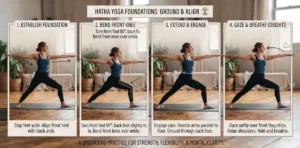
Benefits: Improves physical strength, flexibility, mental clarity, reduces stress.
Best for: Those new to yoga or looking for a slower, grounding practice.
3. Yin Yoga
Yin targets the deep connective tissues: fascia, ligaments, and joints. Poses are held for two to five minutes, allowing the body to release tension gradually.

Benefits: Increases flexibility, joint mobility, and relaxation.
Best for: Tight hips, recovery days, or anyone who sits at a desk all day.
4. Power Yoga
Power yoga is a faster, more intense form of Vinyasa. It builds heat, strength, and endurance. A 30-minute session can leave you sweating and energized.

Benefits: Builds muscle strength, cardiovascular health, flexibility, aids weight management.
Best for: Fitness-focused practitioners who want a challenge.
5. Restorative Yoga
Restorative yoga uses props like bolsters, blankets, and blocks to support the body in gentle poses. Poses are held for several minutes. The goal is not stretching. It is deep relaxation.

Benefits: Reduces stress and anxiety, releases physical tension, promotes better sleep.
Best for: High-stress lifestyles, insomnia, or anyone recovering from illness.
6. Kundalini Yoga
Kundalini combines movement, breathwork, mantra, and meditation to awaken energy at the base of the spine. It is a spiritual and physical practice.

Benefits: Balances energy, enhances focus, raises spiritual awareness, boosts vitality.
Best for: Those seeking mental clarity and a deeper mind-body connection.
7. Iyengar Yoga
Iyengar emphasizes precise alignment and the use of props. Poses are held longer, and attention to detail is key. It is excellent for building body awareness.

Benefits: Improves posture, body awareness, aids injury recovery.
Best for: Those recovering from injury or wanting to refine their practice.
8. Bikram Yoga
Bikram consists of 26 postures performed in a heated room (around 105°F). The heat promotes sweating and deep stretching. A 30-minute version covers a condensed sequence.

Benefits: Promotes detoxification, increases flexibility, improves cardiovascular health.
Best for: Heat lovers and those seeking intense flexibility work.
A word of caution: The Cleveland Clinic warns that hot yoga can lead to dehydration and overheating. Drink water before, during, and after. Skip it if you are pregnant, have heart conditions, or are sensitive to heat.
9. Ashtanga Yoga
Ashtanga follows a set sequence of postures, performed in the same order every time. It is physically demanding and requires discipline.

Benefits: Builds strength, flexibility, stamina, mental focus, and self-discipline.
Best for: Experienced practitioners who thrive on structure.
10. Anusara Yoga
Anusara is a heart-centered practice that emphasizes alignment and positive intention. It blends physical postures with philosophical principles.

Benefits: Promotes emotional balance and a positive outlook.
Best for: Those seeking a practice that blends physical and emotional well-being.
11. Kripalu Yoga
Kripalu focuses on self-compassion and inner awareness. It encourages you to move at your own pace and listen to your body.

Benefits: Reduces stress, promotes emotional healing and self-awareness.
Best for: Anyone dealing with stress, burnout, or emotional fatigue.
12. Jivamukti Yoga
Jivamukti integrates physical postures with ethical principles and spiritual teachings. It is a vigorous practice with a strong philosophical foundation.

Benefits: Fosters a sense of connectedness and purpose.
Best for: Those seeking a practice that extends beyond the mat.
13. Sivananda Yoga
Sivananda is a holistic approach that combines postures, breathing exercises, and meditation. It follows a set structure that includes relaxation at the beginning and end.

Benefits: Improves overall health and peace of mind.
Best for: Those who want a complete mind-body practice in one session.
14. Aerial Yoga
Aerial yoga uses hammocks or silks suspended from the ceiling. It allows you to perform traditional poses with support and added challenge.

Benefits: Enhances flexibility, balance, and core strength.
Best for: Adventurous practitioners looking to try something new.
15. AcroYoga
AcroYoga is a partner-based practice that combines yoga with acrobatics. It builds trust, communication, and strength.
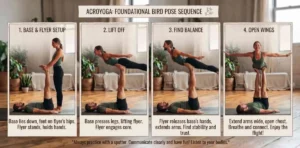
Benefits: Improves trust, communication, physical strength, and relationships.
Best for: Partners, friends, or anyone who enjoys playful movement.
Quick Reference: What to Choose Based on Your Goal
| Your Goal | Best Yoga Style |
|---|---|
| Stress relief | Restorative, Hatha, Kripalu |
| Flexibility | Yin, Bikram, Aerial |
| Strength | Power, Ashtanga, AcroYoga |
| Weight management | Power, Vinyasa |
| Better sleep | Restorative, Yin, Sivananda |
| Mental clarity | Kundalini, Anusara, Jivamukti |
| Injury recovery | Iyengar, Hatha |
| Emotional healing | Kripalu, Anusara |
Frequently Asked Questions
Why opt for quick yoga sessions?
Quick sessions offer flexibility, making it easier to fit yoga into a busy schedule. Even 30 minutes delivers immediate mental and physical benefits.
How long is a typical quick yoga session?
Quick sessions typically last 15 to 30 minutes. They are condensed but still effective.
Can beginners practice quick yoga sessions?
Absolutely. Short sessions often focus on foundational poses and breathing, making them ideal for beginners.
Are quick yoga sessions effective for stress relief?
Yes. Short sessions often include relaxation poses and breathing exercises that calm the nervous system quickly.
Can I do quick yoga sessions every day?
Yes. Daily practice is encouraged. Short sessions are a manageable way to build consistency.
What equipment do I need?
A yoga mat is sufficient. Blocks and straps can help with support and comfort.
Can quick sessions be done at any time of day?
Yes. Morning sessions energize. Midday sessions reset. Evening sessions relax.
What if I am not flexible?
Flexibility is not a prerequisite. It is a result. Start where you are and modify as needed.
Final Thoughts
Yoga does not have to be a time commitment. It can be a 30-minute pause in your day. A reset. A moment to breathe.
Fifteen styles. One mat. Thirty minutes. Pick what resonates with you and start today. Your body and mind will thank you.
Suggested Articles
Disclaimer: This article is for informational purposes only and does not constitute medical advice. Consult a healthcare provider before starting any new exercise routine, especially if you have pre-existing health conditions or injuries.