

You went outside. You forgot to reapply. Now you have a tan line that looks like a poorly drawn map of your summer.
It happens to the best of us. A tan might look healthy at first, but when it turns patchy, uneven, or darker than you intended, it stops feeling like a glow and starts feeling like a problem. The good news? You do not have to live with it.
Here is everything you need to know about removing a tan, from simple home remedies to dermatologist-backed treatments.
What Actually Causes a Tan?
A tan is your skin’s defense mechanism. When UV rays hit your skin, your body produces extra melanin to protect itself from further damage. That melanin is what darkens your skin.
The problem is that melanin production is not always even. Sun exposure can leave you with patchy areas, darker spots, and a complexion that looks dull instead of radiant. According to the American Academy of Dermatology , the best way to prevent this is daily sunscreen with SPF 30 or higher.
But if you already have a tan, here is how to fade it.
Natural Home Remedies That Actually Work
Your kitchen has some surprisingly effective ingredients. Just remember: natural does not always mean gentle. Always patch test first.
Lemon and Honey
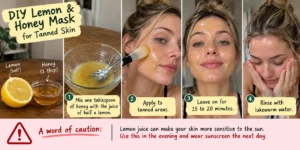
Lemon juice contains citric acid, a natural exfoliant that helps lighten the top layer of your skin. Honey is a humectant, meaning it draws moisture in.
How to use:
-
Mix one tablespoon of honey with the juice of half a lemon
-
Apply to tanned areas
-
Leave on for 15 to 20 minutes
-
Rinse with lukewarm water
A word of caution: Lemon juice can make your skin more sensitive to the sun. Use this in the evening and wear sunscreen the next day.
Aloe Vera Gel
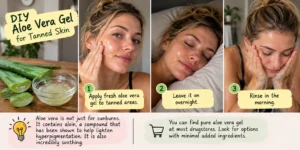
Aloe vera is not just for sunburns. It contains aloin, a compound that has been shown to help lighten hyperpigmentation. It is also incredibly soothing.
How to use:
-
Apply fresh aloe vera gel to tanned areas
-
Leave it on overnight
-
Rinse in the morning
You can find pure aloe vera gel at most drugstores. Look for options with minimal added ingredients.
Turmeric and Milk
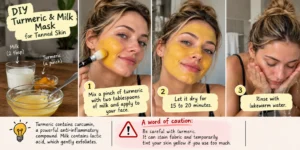
Turmeric contains curcumin, a powerful anti-inflammatory compound. Milk contains lactic acid, which gently exfoliates.
How to use:
-
Mix a pinch of turmeric with two tablespoons of milk
-
Apply to your face
-
Let it dry for 15 to 20 minutes
-
Rinse with lukewarm water
Be careful with turmeric. It can stain fabric and temporarily tint your skin yellow if you use too much.
Over-the-Counter Products That Help
If home remedies feel like too much work, there are plenty of effective products available.
Exfoliating Scrubs
Scrubs physically remove dead skin cells, which helps fade tans faster. Look for gentle formulas with ingredients like oatmeal or sugar. Avoid harsh, abrasive scrubs that can irritate your skin.
Vitamin C Serums
Vitamin C is a rockstar for brightening. It inhibits tyrosinase, the enzyme that produces melanin. Apply a vitamin C serum every morning before sunscreen.
Tan Removal Face Packs
Face packs designed for tan removal often contain ingredients like licorice, kojic acid, or niacinamide. These help lighten pigmentation and even out skin tone.
Dermatologist-Recommended Treatments
If you want faster, more dramatic results, professional treatments are worth considering. According to Healthline , gentle exfoliation and consistent sunscreen use are the foundation of any tan removal routine. For stubborn cases, a dermatologist can recommend prescription-strength options.
Chemical Peels
Chemical peels use acids like glycolic acid or lactic acid to remove the top layer of dead skin. This reveals fresher, lighter skin underneath. Peels range from gentle to intense, so consult a dermatologist to find the right strength for you.
Laser Therapy
Laser treatments target melanin directly, breaking up pigmentation for a more even tone. These are effective but can be expensive and require multiple sessions.
Prescription Topicals
Ingredients like hydroquinone, tretinoin, and azelaic acid are available by prescription. They are highly effective for stubborn hyperpigmentation but should only be used under a doctor’s supervision.
What to Avoid
-
Tanning beds: They are not safer than the sun. They increase your risk of skin cancer.
-
Harsh scrubs: Over-exfoliating damages your skin barrier and can make pigmentation worse.
-
Skipping sunscreen: No tan removal treatment will work if you keep exposing your skin to UV rays.
How to Prevent Future Tans
Prevention is simpler than removal. These habits will save you a lot of frustration.
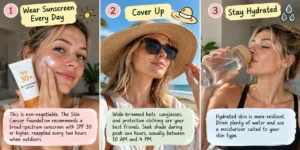
Wear Sunscreen Every Day
This is non-negotiable. The Skin Cancer Foundation recommends a broad-spectrum sunscreen with SPF 30 or higher, reapplied every two hours when outdoors.
Cover Up
Wide-brimmed hats, sunglasses, and protective clothing are your best friends. Seek shade during peak sun hours, usually between 10 AM and 4 PM.
Stay Hydrated
Hydrated skin is more resilient. Drink plenty of water and use a moisturizer suited to your skin type.
Quick Reference: Tan Removal at a Glance
| Method | Best For | Time to See Results |
|---|---|---|
| Lemon and Honey | Mild tans, brightening | 2 to 4 weeks |
| Aloe Vera | Soothing, gentle fading | 3 to 4 weeks |
| Turmeric and Milk | Uneven tone, dullness | 2 to 4 weeks |
| Exfoliating Scrubs | Surface-level tan | 1 to 2 weeks |
| Vitamin C Serums | Brightening, pigmentation | 4 to 8 weeks |
| Chemical Peels | Stubborn tans, uneven tone | 1 to 2 weeks |
| Laser Therapy | Deep pigmentation | Multiple sessions |
Frequently Asked Questions
How long does it take to remove a tan?
It depends on the method. Natural remedies may take a few weeks. Professional treatments can show results in days. Consistency is key.
Can I remove a tan permanently?
You can reduce and fade a tan, but your skin will re-tan with sun exposure. Prevention is the only permanent solution.
Is lemon juice safe for all skin types?
No. Lemon juice can irritate sensitive skin. Always dilute it and patch test first.
Are tanning beds safer than sun tanning?
No. Tanning beds emit UV radiation and increase your risk of skin cancer. Avoid them.
Do I need to see a dermatologist for tan removal?
Not necessarily. But if you have stubborn pigmentation, deep tans, or skin conditions like melasma, a dermatologist can recommend more effective treatments.
Final Thoughts
A tan does not have to be permanent. With the right combination of home remedies, over-the-counter products, and professional treatments, you can restore your skin’s natural glow.
Just remember: the best tan removal strategy is prevention. Wear your sunscreen. Reapply often. Cover up. Your future self will thank you.
Suggested Articles
Disclaimer: This article is for informational purposes only and does not constitute medical or dermatological advice. Patch test all remedies before use. If you have persistent pigmentation or skin concerns, consult a board-certified dermatologist.