

Picking a sunscreen should be simple. Walk into any drugstore, grab a bottle, and go. Right?
Not quite. The sunscreen aisle is overwhelming. SPF 30. SPF 50. SPF 100. Mineral. Chemical. Water-resistant. Broad-spectrum. The labels start blending together, and most people just grab whatever is on sale.
But here is the thing: the wrong sunscreen for your skin type is a sunscreen you will not use. And the best sunscreen in the world does nothing if it sits in your bathroom cabinet.
This guide will help you cut through the noise and find the right SPF for your skin.
What Does SPF Actually Mean?
SPF stands for Sun Protection Factor. It measures how well a sunscreen protects against UVB rays, which are the primary cause of sunburn and contribute to skin cancer risk. The American Academy of Dermatology recommends using a broad-spectrum sunscreen with SPF 30 or higher every day, year-round.
Here is the part most people get wrong: SPF does not tell you how long you can stay in the sun. It tells you how much UVB radiation reaches your skin. SPF 30 blocks approximately 97% of UVB rays under ideal conditions. SPF 50 blocks about 98%. The difference between the two is smaller than most people realize.
What matters more than the number is whether you are applying enough and reapplying consistently. Research shows most people apply only 25% to 50% of the recommended amount, which means they are not getting the protection listed on the label.
UVA vs. UVB: Why Broad-Spectrum Matters
There are two types of UV rays that reach your skin, and they do different things.
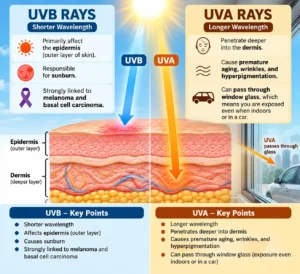
UVB rays have a shorter wavelength. They primarily affect the epidermis, the outer layer of your skin. These are the rays responsible for sunburn. UVB exposure is strongly linked to melanoma and basal cell carcinoma.
UVA rays have a longer wavelength. They penetrate deeper into the dermis, where they cause premature aging, wrinkles, and hyperpigmentation. UVA rays can pass through window glass, which means you are exposed even when you are indoors or in a car.
A sunscreen labeled broad-spectrum protects against both UVA and UVB. If a sunscreen does not say broad-spectrum, it may only protect against UVB, leaving you vulnerable to UVA damage.
How to Pick the Right Sunscreen for Your Skin Type
Different skin types need different formulas. Here is how to match your sunscreen to your skin.
Oily and Acne-Prone Skin
The challenge with oily skin is finding a sunscreen that protects without adding shine or clogging pores. Look for labels that say oil-free and non-comedogenic.
Dr. Jane Yoo, a board-certified dermatologist and Mohs surgeon, recommends the Supergoop Unseen Sunscreen SPF 40 as her top pick for oily and acne-prone skin. It has an oil-free, gel-to-powder texture with a matte finish that doubles as a makeup primer.
Other options for oily skin:
-
Cetaphil Sheer Mineral SPF 50 (budget-friendly option)
Dry Skin
Dry skin needs hydration along with protection. Look for moisturizing formulas with ingredients like hyaluronic acid, glycerin, or ceramides.
Dr. Yoo recommends the belif The True Cream Aqua Bomb Sunscreen SPF 45 , which functions as both moisturizer and sunscreen in one step. It contains panthenol and glycerin to prevent the tight, dry feeling that some SPFs cause.
Other options for dry skin:
Sensitive and Reactive Skin
Sensitive skin needs gentle formulas free from potential irritants. Look for mineral sunscreens with zinc oxide or titanium dioxide as the active ingredients. These sit on top of the skin and are less likely to cause reactions than chemical filters.
Dr. Yoo recommends the La Roche-Posay Anthelios UV Air SPF 50 for sensitive skin. It is formulated with soothing thermal spring water and niacinamide, making it well-tolerated for reactive or easily irritated skin.
Other options for sensitive skin:
Combination Skin
Combination skin needs balance. A lightweight formula that hydrates without adding oil works best. Gel-based sunscreens or fluid formulas are usually good choices. Look for something that absorbs quickly and does not leave a greasy residue on the T-zone.
How Much Sunscreen Should You Use?
This is where most people fall short.
According to the Skin Cancer Foundation, you should use approximately a nickel-sized amount for your face and at least two tablespoons (roughly the size of a shot glass) for your entire body.
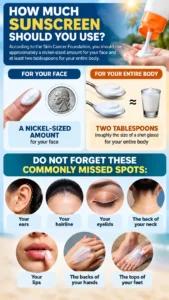
Do not forget these commonly missed spots:
-
Your ears
-
Your hairline
-
Your eyelids
-
The back of your neck
-
Your lips
-
The backs of your hands
-
The tops of your feet
How Often Should You Reapply?
Sunscreen is not a one-and-done product. Reapply every two hours when you are outdoors, and immediately after swimming, sweating heavily, or towel drying.
If you are indoors near a window, a morning application is usually sufficient. But if you are sitting by a window for hours, reapply.
What About Water Resistance?
If you are planning to swim or engage in activities that make you sweat, look for a water-resistant sunscreen. Keep in mind that no sunscreen is completely waterproof. Water-resistant sunscreens are effective for a certain amount of time, usually 40 to 80 minutes, so you will need to reapply.
What Changed with Sunscreen Ingredients?
The FDA has been modernizing sunscreen regulations. In June 2026, the agency added bemotrizinol (BEMT) to the permitted sunscreen active ingredients list. This is the first new sunscreen filter approved in the US in over two decades. It provides broad-spectrum UVA and UVB protection and is considered safe for adults and children six months and older.
“Bemotrizinol has a long history of use in Europe and Asia,” says Dr. Andrew Truong, a dermatologist at Columbia University. “Now, people in the U.S. will have more ways to protect their skin.”
The FDA also removed PABA and trolamine salicylate from the approved list after determining they are not generally recognized as safe and effective.
Quick Reference: Sunscreen Selection Guide
| Skin Type | Key Ingredients | Best For |
|---|---|---|
| Oily/Acne-Prone | Oil-free, non-comedogenic, niacinamide | Supergoop Unseen, EltaMD UV Clear |
| Dry | Hyaluronic acid, glycerin, ceramides | belif Aqua Bomb, CeraVe Hydrating |
| Sensitive | Zinc oxide, titanium dioxide, fragrance-free | La Roche-Posay Anthelios, Blue Lizard |
| Combination | Lightweight, gel-based | Fluid formulas, oil-free lotions |
Frequently Asked Questions
Can I use sunscreen only when it is sunny?
No. UV rays penetrate clouds and can cause damage even on overcast days. Daily use is recommended regardless of weather.
Is it necessary to apply sunscreen indoors?
Yes, especially if you are near windows. UVA rays penetrate glass and contribute to premature aging and skin damage.
Can I skip sunscreen if my makeup has SPF?
No. The SPF in makeup is usually not enough to provide adequate protection. Apply a dedicated sunscreen first, then layer makeup on top.
Do darker skin tones need sunscreen?
Absolutely. While more melanin offers some natural protection, it does not prevent sun damage or skin cancer. Everyone needs sunscreen.
Is SPF 100 better than SPF 50?
Not significantly. SPF 50 blocks about 98% of UVB rays, while SPF 100 blocks about 99%. The difference is minimal, and higher SPF formulas can feel thicker or leave a white cast.
Final Thoughts
The best sunscreen is the one you will actually wear every day. It should feel comfortable on your skin, fit your budget, and protect against both UVA and UVB rays.
Know your skin type. Look for broad-spectrum protection. Apply enough product. Reapply consistently. Do those four things, and you are doing more for your skin than any anti-aging serum can.
Suggested Articles
Disclaimer: This article is for informational purposes only and does not constitute medical or dermatological advice. Consult a board-certified dermatologist if you have specific skin concerns or a history of skin cancer.