



Soya Chunks: A Complete Guide to Plant-Based Protein
Soya chunks have become increasingly popular as a source of plant-based protein, particularly for vegetarians, vegans, and anyone looking to reduce their meat consumption. In the United States, you may know them better as Textured Vegetable Protein (TVP) or soy nuggets. Made from defatted soy flour, these small, versatile nuggets are a byproduct of soybean oil extraction. What remains is a protein-dense flour that is texturized, cooked under pressure, and dried into various shapes.
Despite their humble appearance, soya chunks are a nutritional powerhouse. A 100-gram serving of dry soya chunks provides approximately 52 grams of protein, along with 33 grams of carbohydrates, 13 grams of dietary fiber, and just 0.5 grams of fat. They are also rich in essential minerals like calcium (350 mg), iron (15.7–20 mg), and magnesium, along with B vitamins. All of this comes in at roughly 345 calories per 100 grams dry.
For American consumers looking for affordable, shelf-stable, and nutrient-dense protein sources, soya chunks offer a compelling option. They require no refrigeration, are easy to transport and store, and can be rehydrated and used in countless recipes. Once soaked, they expand to about double their dry volume and develop a chewy, meat-like texture that absorbs flavors beautifully. This makes them an excellent substitute for ground beef or chicken in dishes like chili, tacos, pasta sauces, and stir-fries.
Health Benefits of Soya Chunks
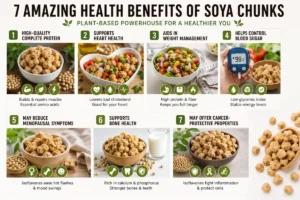
There are many benefits attributed to including soya chunks as part of a healthy, balanced diet. Here are some of the most significant ones:
High-Quality Complete Protein
Soya is one of the few plant-based foods that provides a complete protein, meaning it contains all nine essential amino acids that your body cannot produce on its own. This makes soy protein comparable to animal-based protein sources in terms of amino acid quality. The amino acid profile of soy protein is similar to that of meat and milk, making it an excellent choice for vegetarians, vegans, and anyone looking to build or maintain muscle mass.
Supports Heart Health
Soya chunks are naturally cholesterol-free and low in saturated fat. They contain soluble fiber, polyunsaturated fats, and soy protein, all of which contribute to heart health. Research has shown that consuming soy protein can help lower LDL (“bad”) cholesterol levels. A study from Stanford Medicine found that a 25-gram daily dose of soy protein led to a modest 5% reduction in LDL cholesterol in adults with moderately elevated levels. A meta-analysis also confirmed that soy protein supplementation decreased total cholesterol and LDL cholesterol. According to the National Center for Complementary and Integrative Health (NCCIH), soy chunks help lower cholesterol levels.
Aids in Weight Management
With their high protein and fiber content, soya chunks are an excellent addition to a weight management plan. Protein is the most satiating macronutrient; it suppresses the hunger hormone ghrelin and increases levels of peptide YY, a hormone that makes you feel full. The dietary fiber in soya chunks also takes longer to digest, keeping you satisfied for longer periods and reducing the urge to snack between meals. Additionally, protein has a high Thermic Effect of Food (TEF)—roughly 20% to 30% of the calories from protein are burned during digestion. By replacing some of your calorie intake with soy protein, you can slightly increase your daily calorie expenditure.
Helps Control Blood Sugar
Soya chunks have a low glycemic index (GI). This means they help prevent sharp spikes in blood sugar levels. The fiber and protein in soya chunks ensure a slow, steady absorption of glucose from the bloodstream, making them a good option for people with diabetes or those looking to manage their blood sugar levels. The low carbohydrate content and high protein content lead to slower digestion and a reduced insulin response.
May Reduce Menopausal Symptoms
Soya chunks contain plant-based compounds called isoflavones, which are phytoestrogens that behave like weak estrogens in the body. These isoflavones have been shown to help alleviate unpleasant menopausal symptoms like hot flashes, mood swings, and bone loss. Some studies suggest that consuming 15–60 grams of soy protein (providing 34–100 mg of isoflavones) daily may reduce hot flashes in some women.
Supports Bone Health
Soya chunks are rich in calcium and phosphorus, both of which are essential for maintaining strong bones and teeth. The calcium content in soya chunks (350 mg per 100g) is particularly beneficial for those who do not consume dairy products.
May Offer Cancer-Protective Properties
Population studies have indicated that soy intake may be associated with a reduced risk of certain cancers, including prostate and breast cancer. The isoflavones found in soy products have been linked with anti-inflammatory and anti-carcinogenic properties. A meta-analysis of 30 studies found that higher soy consumption was associated with a 26% reduction in prostate cancer risk. Dietitians also note that isoflavones can help reduce inflammation and are rich in antioxidants, which are crucial for preventing oxidative stress—a known risk factor for cancer development.
Soya Chunks vs. Chicken: A Protein Showdown
A common question is how the protein quality of soya chunks compares to that of chicken. This comparison has gained attention, including from US-based experts. California-based gastroenterologist Dr. Palaniappan Manickam has stated: “If you compare gram by gram, soya is equal to chicken in terms of protein and in some cases, better than it”.
Here is a direct comparison:
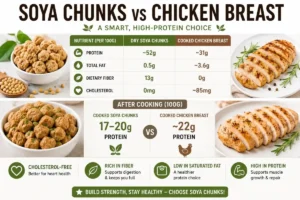
However, it is important to note that this comparison is somewhat indirect because chicken is typically consumed as-is, while soya chunks double in volume after rehydration. When comparing cooked soya chunks (after rehydration) to cooked chicken, the protein content is closer: 100g of cooked soya chunks contains about 17–20g of protein, compared to roughly 22g in 100g of cooked chicken breast.
That said, soya chunks still offer a significant advantage: they are cholesterol-free and contain beneficial dietary fiber, which chicken lacks. For those seeking to reduce their intake of saturated fat and cholesterol while maintaining high protein intake, soya chunks are an excellent alternative.
Soya Chunks During Pregnancy
Expecting mothers have increased protein needs, typically ranging between 60–100 grams per day to support the baby’s growth and development. Soya chunks can help meet these requirements.
In normal food amounts, soy is considered safe for most pregnant women. Soybeans, tofu, tempeh, and fortified soy milk are nutrient-dense foods that provide high-quality protein, fiber, iron, and—when fortified—calcium and vitamin B12.
A common concern is that the isoflavones in soy might affect hormones during pregnancy. However, the isoflavones are converted to inactive forms upon digestion, and moderate soy consumption does not lead to hormonal changes or imbalances. Studies indicate that Asian women continue using soy in moderation throughout pregnancy without concerns.
Recommendations for pregnant women:
-
Stick to about 25–30g of soya chunks or 1 cup of soy milk per day.
-
Always cook soya chunks thoroughly before consumption.
-
Avoid raw or undercooked soy products, as they may contain compounds that interfere with nutrient absorption.
-
Consult with a healthcare provider if you have a history of hormonal disorders or are undergoing fertility treatment.
Safety, Side Effects, and Precautions
Despite the wide range of benefits, soya chunks do come with a few precautions:
Allergies
People with soy allergies should avoid soya chunks entirely. Stop usage if any irritation, redness, or swelling occurs, indicating a possible allergy.
Thyroid Considerations
Soy contains goitrogens, which can interfere with thyroid function, particularly in individuals with iodine deficiency. Research published in Frontiers in Nutrition indicates that soy isoflavones can affect thyroid hormone production only when iodine intake is already low. As long as you get enough iodine from salt, dairy, or seafood, regular soy consumption is not a concern.
For those on thyroid medication, it is important to keep a gap of three to four hours between consuming soy and taking thyroid tablets, as soy can interfere with the absorption of synthetic thyroid hormone.
Hormonal Effects (The “Man Boobs” Myth)
One of the most persistent myths about soya chunks is that they can cause hormonal imbalances or “man boobs” in men. Dr. Palaniappan Manickam has addressed this directly: “Soya actually contains phytoestrogen and not actually estrogen. You need to eat in kilos to actually develop that. That is a myth”. Moderate soy consumption does not impact hormone levels or health in regular individuals.
Digestive Issues
The high fiber content in soya chunks can sometimes cause bloating or gas, particularly in those with sensitive stomachs. To minimize this, start with smaller portions and gradually increase intake.
Recommended Daily Intake
Stick to about 25–30 grams of soya chunks per day if eaten regularly.
How to Cook and Include Soya Chunks in Your Diet
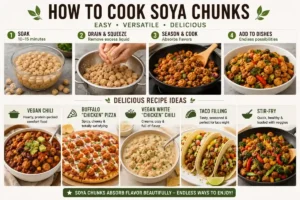
Soya chunks are extremely versatile. Here is a simple guide to preparing them:
-
Soak: Place the soya chunks in a bowl and cover with hot water or broth. Let them soak for 10–15 minutes until they soften and double in volume.
-
Drain and Squeeze: Drain the water and gently squeeze out excess liquid.
-
Season and Cook: The rehydrated chunks readily absorb flavors, so you can marinate them with spices, sauces, and seasonings.
-
Add to Dishes: Use them in stir-fries, curries, soups, casseroles, tacos, chili, pasta sauces, or as a filling for wraps and sandwiches.
Recipe Ideas for American Kitchens:
-
Vegan Chili: Replace ground beef with rehydrated soya chunks in your favorite chili recipe.
-
Buffalo “Chicken” Pizza: Coat soya chunks in buffalo sauce and use them as a pizza topping.
-
Vegan White “Chicken” Chili: A quick and flavorful comfort food made with soy chunks, beans, bell peppers, and garlic.
-
Taco Filling: Crumble rehydrated soya chunks and season with taco spices for a plant-based taco night.
-
Stir-Fry: Toss with vegetables and your favorite sauce for a quick, protein-packed meal.
Buying Soya Chunks (TVP) in the USA
In the United States, you can find soya chunks under the name Textured Vegetable Protein (TVP) in most grocery stores, often in the health food or bulk foods section. Popular brands include:
-
Bob’s Red Mill TVP: A widely available, 100% vegan, gluten-free textured vegetable protein made from soy, delivering 13 grams of complete protein per serving with zero fat.
-
Organic Soy Chunks: Available from various brands online, these are non-GMO, vegan, and kosher-certified.
You can also find soya chunks at Walmart, specialty health food stores, and online retailers like Amazon.
Frequently Asked Questions
Are soya chunks good for weight loss?
Yes. With high protein and fiber content, soya chunks help induce a feeling of fullness and control hunger pangs. Protein takes longer to digest and builds metabolism-boosting muscle, making soya chunks beneficial for weight management.
Can we eat soya chunks daily?
Yes, having 25–30 grams of soya chunks daily provides adequate protein intake for good health. Soya protein quality equals animal sources and causes no significant side effects when consumed in moderation.
Is having soya chunks at night bad?
No. You can have soya chunks even at night without issues. Current evidence shows that fermented forms like tempeh get digested faster than meat.
Do soya chunks increase estrogen levels?
No. Isoflavones resemble estrogen but are converted to inactive forms upon digestion. Moderate soy intake does not impact hormone levels or health in regular individuals.
What are soya chunks made of?
Defatted soy flour is hydrated and extruded through an expander to form different shapes like chunks and granules. The hydrated dough is cooked with steam and dried to lower moisture content for longer shelf life.
How to cook soya chunks for best protein absorption?
Always soak or boil soya chunks before use—raw chunks are not digestible. Combining soya chunks with vitamin C-rich foods like citrus fruits also promotes iron absorption from plant sources.
What are the side effects of eating too much soy?
Consuming highly processed soy supplements long-term in large amounts may cause gastric distress. Stick to moderate amounts of traditional soy foods like soya chunks, tofu, and edamame within a balanced diet.
Can diabetic patients eat soya chunks?
Yes. Soya chunks have a low glycemic index, preventing blood sugar spikes. The protein and fiber aid glucose regulation, so diabetics can include soya chunks safely within their carbohydrate limits.
Does having soya chunks cause constipation?
No. The high fiber content actually prevents constipation by adding bulk to stool and promoting regular bowel movements.
Conclusion
Soya chunks—or Textured Vegetable Protein—offer an affordable, versatile, and nutrient-dense protein source that fits seamlessly into a modern American diet. With approximately 52 grams of protein per 100 grams dry weight, they rival and even surpass many animal-based proteins in concentration. Their complete amino acid profile, high fiber content, and zero cholesterol make them an excellent choice for heart health, weight management, blood sugar control, and more.
From vegan chili and buffalo “chicken” pizza to simple stir-fries and curries, soya chunks can be adapted to countless recipes and cuisines. They are shelf-stable, easy to prepare, and budget-friendly—making them an ideal pantry staple for health-conscious individuals and families alike.
As with any dietary change, moderation is key. Stick to 25–30 grams per day, ensure adequate iodine intake if you have thyroid concerns, and consult with a healthcare professional if you have specific medical conditions or are pregnant. When sourced from reputable brands and prepared properly, soya chunks are a safe, sustainable, and delicious way to boost your protein intake and support your overall health.