




DIY Vertical Garden: Transforming Your Space with Greenery
Creating a vertical garden or living wall is a rewarding project that adds a touch of nature and elegance to your living spaces. This innovative gardening technique allows you to maximize space and introduce greenery into areas where traditional gardening might be limited. In this comprehensive guide, we’ll explore how to create your own vertical garden, from preparation to care, without relying on numbered steps.
Preparation:
Before you embark on your vertical garden project, thorough preparation is key to its success. Here are the essential aspects to consider:
Selecting the Perfect Location:
The first step in your vertical garden journey is to choose the right location. Consider the following factors:
- Light Conditions: Assess the amount of sunlight the chosen area receives throughout the day. Different plants have varying light requirements, so understanding your space’s lighting conditions is crucial.
- Aesthetics: Think about how your vertical garden will fit into the overall design and ambiance of your home or outdoor space. Consider the colors, textures, and visual appeal you want to achieve.
Gathering Your Materials to Create a vertical garden all by yourself
Once you’ve identified the ideal location, it’s time to gather the necessary materials for your vertical garden project. These materials include:
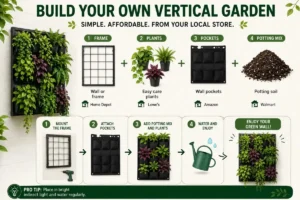
- Vertical Garden Frame or Wall Space: Depending on your available space and design preferences, you can purchase a ready-made vertical garden frame or use a blank wall or vertical surface.
- Plants: Carefully select a variety of plants that thrive in the lighting conditions of your chosen location. Cascading, trailing, and compact plants work well in vertical gardens, creating a visually appealing mix of textures and colors.
- Plant Containers or Pockets: To house your plants and potting mix, invest in plant containers or pockets specifically designed for vertical gardens. Alternatively, get creative by repurposing items like shoe organizers, gutters, or fabric pockets.
- Potting Mix: Choose a high-quality potting mix that suits the needs of your selected plants. Ensure it offers good drainage to prevent waterlogged roots.
- Mounting Hardware: Depending on your wall or frame, you may require hooks, nails, or other sturdy mounting hardware. Make sure it can support the weight of your vertical garden.
- Watering System: Decide on a watering system that matches your lifestyle and plant choices. Options range from manual watering with a hose or watering can to more automated solutions like drip irrigation systems.
Design and Layout to Create a vertical garden all by yourself
With materials in hand, consider the design and layout of your vertical garden:
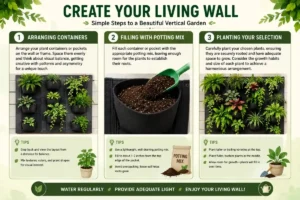
- Arranging Containers: Arrange your plant containers or pockets on the wall or frame. Space them evenly and think about visual balance, getting creative with patterns and asymmetry for a unique touch.
- Filling with Potting Mix: Fill each container or pocket with the appropriate potting mix, leaving enough room for the plants to establish their roots.
- Planting Your Selection: Carefully plant your chosen plants, ensuring they are securely rooted and have adequate space to grow. Consider the growth habits and size of each plant to achieve a harmonious arrangement.
Watering and Maintenance:
Once your vertical garden is established, the key to its ongoing success lies in proper care and maintenance:
- Watering: Establish a consistent watering schedule based on your plant species’ specific requirements. Monitor soil moisture levels to avoid over- or underwatering.
- Maintenance: Regularly inspect your vertical garden for signs of growth, health, and any necessary maintenance. Prune or replace plants that have outgrown their containers, remove dead leaves, and keep an eye out for pests.
Building a vertical garden is a fulfilling and creative endeavor. It allows you to blend your artistic vision with nature’s beauty, transforming any space into a lush, living work of art. With the right location, materials, and care, your vertical garden will flourish, bringing beauty and tranquility to your surroundings.