



Page Contents
The Science Behind Nature’s Brightening Berry
TL;DR
-
Blueberry juice at 1 mg/mL inhibits tyrosinase activity by 78%, which is comparable to kojic acid, a standard skin-lightening agent
-
Wild blueberries pack twice the antioxidant punch of cultivated varieties because they have more skin relative to pulp
-
Blueberry extract shields your skin from UV radiation, ozone exposure, and pollution while reducing collagen breakdown
-
The skin contains the highest concentration of beneficial compounds, making wild berries more potent
-
A 2023 review confirms that topical blueberry compounds trigger an active skin response against environmental damage
-
Fermented blueberry juice has been shown to boost collagen and hydroxyproline levels by positively influencing gut bacteria
Let’s be honest. We all want that healthy, radiant glow without resorting to harsh chemicals or expensive treatments. The skincare industry has been hunting for that perfect ingredient for years. Something that actually works but doesn’t irritate your skin. Blueberries, it turns out, might just be that ingredient. Dermatologists are now paying serious attention to this tiny fruit, and for good reason. It’s loaded with antioxidants and bioactive compounds that do wonders for your skin.
Here’s what makes blueberries so special. They work two ways. Eat them and they nourish you from the inside. Apply them topically and they work from the outside. Not many skincare ingredients can claim that kind of versatility. The research on blueberry extract for brightening, anti-aging, and calming inflammation is growing, and both cosmetic chemists and dermatologists are taking notice.
Where It All Started
Blueberries have been prized for their healing properties long before anyone talked about skincare routines. Native Americans used wild blueberries not just as food but as medicine. Modern science is finally catching up to what they already knew.
The magic ingredient here is anthocyanins. These are the pigments that give blueberries their deep, rich blue color. And here’s an interesting fact. These compounds are concentrated in the skin of the berry. That means smaller wild blueberries, with their higher skin-to-pulp ratio, deliver a much stronger antioxidant hit. Research published in the International Journal of Food Properties found that wild blueberries contain more than 25% more anthocyanins per serving than cultivated ones.
Harvard Health backs this up, noting that berries like blueberries are “particularly potent in antioxidant and anti-inflammatory activity.” They contain plant pigments like anthocyanins and ellagic acid that work together to protect your skin cells from damage and keep your skin healthy.
Why This Matters to You Right Now
The skincare world is changing. People are moving away from synthetic ingredients and toward natural options that are backed by real science. You’re probably more conscious about what you put on your skin these days, and you’re not alone. Consumers want products that deliver results without compromising safety.
What used to happen
People relied on harsh chemical peels, synthetic brighteners, or single-ingredient solutions that often irritated their skin or failed to address multiple issues at once
What’s happening now
People are choosing multi-functional natural ingredients like blueberries that tackle several skin concerns at once, from dark spots to inflammation to premature aging
This shift matters because blueberries do something that synthetic alternatives often can’t. They don’t just brighten your skin. They protect it. They don’t just reduce inflammation. They prevent it at the cellular level. Research has shown that blueberry extract can actually help calm your skin’s inflammatory responses.
The market has been missing products that combine effective brightening with comprehensive protection. Blueberries fill that gap naturally.
Let’s Break It Down
How Blueberries Brighten Your Skin
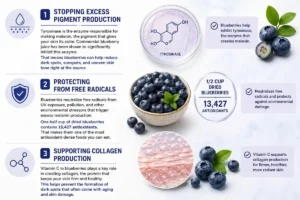
Your skin gets brighter from blueberries through several different mechanisms working together.
Stopping excess pigment production
Tyrosinase is the enzyme responsible for making melanin, the pigment that gives your skin its color. Commercial blueberry juice has been shown to significantly inhibit this enzyme. That means blueberries can help reduce dark spots, sunspots, and uneven skin tone right at the source.
Protecting from free radicals
Blueberries neutralize free radicals from UV exposure, pollution, and other environmental stressors that trigger excess melanin production. One half cup of dried blueberries contains 13,427 antioxidants. That makes them one of the most antioxidant-dense foods you can eat.
Supporting collagen production
Vitamin C in blueberries plays a key role in creating collagen, the protein that keeps your skin firm and healthy. This helps prevent the formation of dark spots that often come with aging and skin damage.
Calming Inflammation
Inflammation is at the root of many skin problems. Acne, redness, sensitivity, and accelerated aging all trace back to inflammation.
Blueberry extract has been shown to significantly reduce the production of inflammatory compounds in your skin. Studies demonstrate that the anti-inflammatory effects work by suppressing specific cellular pathways involved in skin inflammation.
If you have sensitive skin conditions like rosacea, blueberries are especially promising. Dermatologists note that blueberries act as vascular constrictors, which means they can actually help reduce redness for those who struggle with sensitive skin.
Shielding from Environmental Damage
Let’s face it. Our skin takes a beating from the environment every single day. Pollution, UV rays, blue light from screens. It’s a lot.
Blueberry antioxidants are particularly good at protecting your skin from the unwanted changes that happen when it’s exposed to visible and infrared light. Research has shown that blueberry-derived metabolites can actually enhance your skin’s resilience, highlighting their photoprotective potential.
And yes, that includes blue light exposure from your phone and computer. Blueberry extract helps shield your skin from the harmful effects of screen time.
Wild vs Cultivated. What’s the Difference?
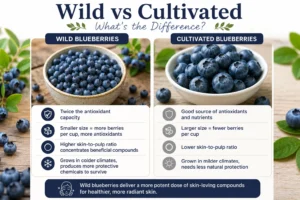
Not all blueberries are the same when it comes to skin benefits. Board-certified dermatologist Dr. Noreen Galaria specifically recommends wild organic blueberries because their thicker skin delivers a much stronger antioxidant punch.
Wild blueberries are superior because:
-
They contain twice the antioxidant capacity of cultivated blueberries
-
Their smaller size means more berries per cup and more antioxidant-rich skin
-
They have a higher skin-to-pulp ratio, concentrating the beneficial compounds
-
They grow in colder climates, which forces them to produce more protective chemicals to survive
Cultivated blueberries still offer benefits, but wild varieties give you a more potent dose of the compounds that improve your skin.
The Gut-Skin Connection
Here’s something fascinating. Emerging research shows that what’s happening in your gut directly affects your skin. Dr. Galaria notes that consuming blueberries can positively influence your gut microbiome, which plays a crucial role in skin health. An imbalanced gut or skin microbiome has been linked to conditions like atopic dermatitis, psoriasis, acne, and dandruff.
A 2026 study published in ScienceDirect found that fermented blueberry juice actually mitigated skin aging by modulating gut microbiota. The fermented juice increased hydroxyproline and collagen levels while changing the gut microbiome to boost short-chain fatty acid contents.
What Clinical Studies Show
The research supports what many have suspected. Blueberries really can reduce visible signs of aging.
A 12-week, double-blind clinical study on 77 women evaluated the anti-aging benefits of a cream enriched with blueberry and pomegranate fruit extracts. These extracts are known glycation inhibitors. They prevent the formation of advanced glycation end products, which cause skin proteins to become brittle and degrade.
A 2025 randomized controlled trial published in the Journal of Cosmetic Dermatology evaluated a topical product containing blueberry extract combined with micro-focused ultrasound for anti-aging. The study noted that blueberry extract is rich in vitamin E, vitamin C, and polyphenolic compounds, all known for their antioxidant and anti-inflammatory properties. Previous clinical trials have shown that products containing blueberry extract had promising results in reducing wrinkles and fine lines.
Who Should Try This
If you have dark spots or uneven skin tone
Anyone dealing with sunspots, melasma, or post-inflammatory hyperpigmentation can benefit from blueberries’ pigment-inhibiting properties. The 78% tyrosinase inhibition demonstrated in research makes blueberries a legitimate natural option for brightening.
If you struggle with inflammatory skin conditions
Those suffering from acne, rosacea, eczema, or psoriasis may find relief through blueberries’ anti-inflammatory effects. For additional skin-soothing support, you can explore other natural ingredients like almond oil , which is known for its ability to calm irritation and reduce redness.
If you’re concerned about aging skin
Vitamin C, vitamin E, and polyphenols in blueberries support collagen production and protect against photoaging.
If you’re exposed to environmental stress
Given the prevalence of pollution and screen exposure, virtually everyone can benefit from blueberries’ protective properties against UV, ozone, and pollution.
The Bigger Picture
The benefits of adding blueberries to your skincare routine go beyond immediate cosmetic improvements. Regular consumption and topical use help your skin build resilience against cumulative environmental damage over time.
The gut-skin axis is becoming an important area of dermatology. Research showing that fermented blueberry juice can modulate gut microbiota to increase collagen levels suggests that blueberries work through multiple pathways to support your skin.
The future of skincare lies in ingredients that work through multiple mechanisms. Blueberries, with their combination of antioxidant, anti-inflammatory, and pigment-inhibiting properties, perfectly exemplify this integrated approach. As Dr. Leslie Baumann, a Miami cosmetic dermatologist, notes, antioxidants like blueberries should be the first line of defense in a botanical approach to anti-aging.
For those dealing with acne or oily skin concerns, a tea tree facewash can be an excellent complement to a blueberry-based routine, as it helps fight breakouts and calm redness with its natural antibacterial properties.
How to Get Started
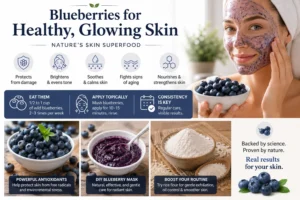
Blueberries offer a compelling, evidence-based case for inclusion in any skincare routine. Whether you eat them regularly, apply them topically, or do both, they provide protection, brightening, and anti-inflammatory benefits that few other natural ingredients can match.
Start with a half cup to a full cup of wild blueberries, two to three times per week. For topical application, try a simple face mask by mashing fresh or thawed blueberries and applying to clean skin for 10 to 15 minutes before rinsing. Consistency matters more than intensity.
You can also experiment with other kitchen staples to enhance your skincare regimen. Rice flour , for instance, is a gentle exfoliant that helps control excess oil, reduces blemishes, and improves skin elasticity when used in DIY face packs.
The science is clear. Blueberries are not just a trend. They are a clinically validated tool for healthier, brighter, more resilient skin.
Frequently Asked Questions
How often should I eat blueberries for skin benefits?
Aim for a half to full cup, two to three times per week for noticeable results. Daily consumption is even better if your digestive system tolerates it well. Dermatologists recommend wild organic blueberries specifically for their higher antioxidant content.
What is the best way to use blueberries topically?
Make a face mask by mashing fresh or thawed blueberries and applying to clean skin for 10 to 15 minutes before rinsing. Combine with yogurt and honey for enhanced benefits. Yogurt provides alpha-hydroxy acids that exfoliate dead skin cells, while honey offers antibacterial properties. Always do a patch test first to check for allergic reactions.
How soon will I see results on my skin from eating blueberries?
Most people notice subtle improvements in skin health, moisture, and clarity within two to four weeks of regular blueberry consumption. Clinical studies on topical products containing blueberry extract typically evaluate results over 12-week periods.
Do wild blueberries have more benefits than regular blueberries?
Yes. Wild blueberries have twice the antioxidant capacity of cultivated blueberries because they have a higher skin-to-pulp ratio. The antioxidants are concentrated in the skin, so more skin means more benefits. Wild Vaccinium extracts have been shown to have 3.04 fold more activity than cultivated extracts.
Can blueberries help reduce my wrinkles?
Yes. Clinical research has shown that products containing blueberry extract had promising results in reducing signs of aging like wrinkles and fine lines. Blueberry extract protects skin from UV radiation and ozone exposure while reducing collagen degradation. It also contains glycation inhibitors that prevent the formation of AGEs, which cause skin to become brittle and lose elasticity.