



If you have ever stood in the skincare aisle wondering whether toner is actually necessary, you are not alone. Toners are one of the most misunderstood steps in a skincare routine. Some people skip them entirely. Others use them incorrectly. And many are unsure which type suits their skin.
Here is what you need to know: Toners serve a specific purpose. They are not just an extra product designed to make you spend more money. When used correctly, they can make a noticeable difference in how your skin looks and feels and how well your other products work.
This guide covers everything from what toner actually does to how to apply it, how to choose the right one, and whether you really need it in your routine.
What Does Toner Actually Do?
Toners are designed to be applied after cleansing and before serums or moisturizers. Their primary role is to reset your skin after washing.
When you cleanse your face, you are not just removing dirt and oil. You are also disrupting your skin’s natural pH balance. Healthy skin has a slightly acidic pH of around 4.5 to 5.5. Many cleansers, especially foaming or bar soaps, can temporarily raise this pH, leaving your skin more alkaline. Toners help bring your skin back to its optimal pH level quickly.
Beyond pH balance, modern toners offer additional benefits depending on their formulation. They can deliver hydration, soothe irritation, remove any leftover impurities, and prep your skin to absorb subsequent products more effectively.
Older toners were often harsh and alcohol-based, designed to strip oil. Today’s formulas are far more sophisticated. They can be hydrating, soothing, or exfoliating, depending on your needs.
Different Types of Toners
Not all toners are the same. Understanding the categories helps you choose the right one.
Hydrating Toners
These focus on delivering moisture. They often contain humectants like glycerin, hyaluronic acid, or aloe vera. They are ideal for dry or dehydrated skin and anyone who wants an extra layer of hydration.
Exfoliating Toners
These contain alpha-hydroxy acids like glycolic acid or lactic acid, or beta-hydroxy acids like salicylic acid. They gently dissolve dead skin cells and help unclog pores. They are best for oily, acne-prone, or dull skin.
Soothing Toners
These are formulated with calming ingredients like rose water, chamomile, or green tea. They reduce redness and irritation. They work well for sensitive or reactive skin.
Clarifying Toners
These often contain ingredients like witch hazel or tea tree oil. They are designed to control oil and minimize the appearance of pores. They are suitable for oily or combination skin.
Balancing Toners
These aim to gently restore pH without adding too much of any other effect. They are the most versatile option and work for most skin types.
| Toner Type | Key Ingredients | Best For |
|---|---|---|
| Hydrating | Glycerin, hyaluronic acid, aloe vera | Dry, dehydrated skin |
| Exfoliating | Glycolic acid, salicylic acid, lactic acid | Oily, acne-prone, dull skin |
| Soothing | Rose water, chamomile, green tea | Sensitive, irritated skin |
| Clarifying | Witch hazel, tea tree oil | Oily, combination skin |
| Balancing | Light botanicals, minimal active ingredients | All skin types |
Do You Actually Need a Toner?
This is the question that lingers in most people’s minds. The honest answer depends on your skin and your goals.
You might benefit from a toner if:
-
Your skin feels tight or stripped after washing
-
You want to add extra hydration without using a heavier product
-
You are dealing with excess oil or clogged pores
-
You use exfoliating acids and want to balance your skin afterward
-
You want your serums and moisturizers to absorb better
You might not need a toner if:
-
Your cleanser is already gentle and pH-balanced
-
Your moisturizer and serum are doing everything you need
-
You have extremely sensitive skin that reacts to most products
-
Your routine is already simple and working well
Toners are optional. They are not essential for everyone. But for many people, they provide benefits that are worth the extra few seconds in their routine.
When to Apply Toner: Morning or Night?
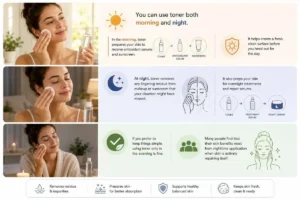
You can use toner both morning and night.
In the morning, toner prepares your skin to receive antioxidant serums and sunscreen. It helps create a fresh, clean surface before you head out for the day.
At night, toner removes any lingering residue from makeup or sunscreen that your cleanser might have missed. It also preps your skin for overnight treatments and repair serums.
If you prefer to keep things simple, using toner only in the evening is fine. Many people find that their skin benefits most from nighttime application when skin is actively repairing itself.
How to Apply Toner Correctly
Proper application makes a difference. Toner applied incorrectly can waste product and reduce benefits.
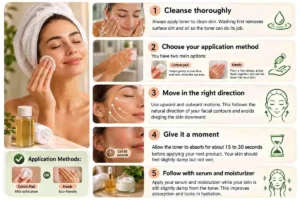
Step 1: Cleanse thoroughly
Always apply toner to clean skin. Washing first removes surface dirt and oil so the toner can do its job.
Step 2: Choose your application method
You have two main options:
-
Cotton pad: Saturate a cotton pad and swipe it gently across your face and neck. Avoid the eye area. This method provides mild physical exfoliation.
-
Hands: Pour a few drops into your palms, press them together, and pat the toner into your skin. This wastes less product and is more eco-friendly.
Step 3: Move in the right direction
Use upward and outward motions. This follows the natural direction of your facial contours and avoids dragging the skin downward.
Step 4: Give it a moment
Allow the toner to absorb for about 15 to 30 seconds before applying your next product. Your skin should feel slightly damp but not wet.
Step 5: Follow with serum and moisturizer
Apply your serum and moisturizer while your skin is still slightly damp from the toner. This improves absorption and locks in hydration.
Do You Rinse Off Toner?
Most toners are meant to be left on the skin. Rinsing them off defeats their purpose and washes away beneficial ingredients before they can work.
However, there are exceptions. Some thick, milky toners may leave a residue that feels heavy on the skin. In those cases, you can rinse after a couple of minutes. Exfoliating toners with strong acids may also irritate sensitive skin if left on. If you experience stinging or redness, try rinsing after a few minutes and see if that helps.
The general rule: Check the product instructions. The manufacturer will tell you whether the toner should be rinsed or left on.
Toner vs. Serum: What Is the Difference?
This confusion is common because both toners and serums come in liquid form and are applied after cleansing. They are not the same.
| Purpose | Toner | Serum |
|---|---|---|
| Prepares skin for subsequent products | ✔ | ✘ |
| Treats specific skin concerns | ✘ | ✔ |
| Balances pH | ✔ | ✘ |
| Delivers concentrated active ingredients | ✘ | ✔ |
| Generally lightweight | ✔ | ✔ |
| Can contain active ingredients | Sometimes | Usually |
Think of toner as the warm-up and serum as the main workout. Toner primes your skin so the serum can work more effectively. They complement each other rather than competing.
Exfoliate Before or After Toner?
Exfoliate before you tone. The correct order is:
-
Cleanse
-
Exfoliate
-
Tone
-
Serum
-
Moisturizer
Exfoliation removes dead skin cells and debris from the surface. Applying toner afterward allows it to penetrate more deeply and balance freshly exposed skin. Toner also helps soothe any mild irritation that exfoliation might have caused.
The only exception is if you are using an exfoliating toner. Some toners themselves contain AHAs or BHAs and serve as your exfoliant. In this case, the toner fulfills both roles.
Can Rose Water Be Used as Toner?
Rose water works beautifully as a toner. It is one of the most gentle, natural options available.
Rose water offers mild astringent properties to help tighten pores and balance oil production. It is rich in antioxidants that protect against environmental damage. It also has anti-inflammatory effects that soothe redness and calm irritation.
Most importantly, rose water is hydrating without being heavy. It suits virtually every skin type, including sensitive and reactive skin.
To use rose water as a toner, apply it to a cotton pad and sweep it over your face after cleansing. You can also pour a small amount into your palms and pat it directly onto your skin. Follow with your regular serum and moisturizer.
Homemade Toner Recipes
Making your own toner is simple and allows you to control exactly what goes on your skin.
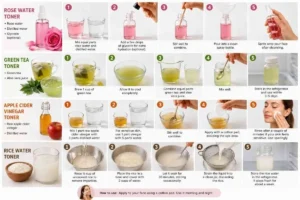
Rose Water Toner
This is the simplest recipe. Mix equal parts rose water and distilled water. For extra hydration, add a few drops of glycerin. Store in a spray bottle and spritz onto your face after cleansing.
Green Tea Toner
Brew a cup of green tea and allow it to cool completely. Combine it with an equal amount of aloe vera juice. Green tea provides antioxidants, while aloe soothes and hydrates. Keep this toner in the refrigerator and use it within three to five days.
Apple Cider Vinegar Toner
Mix one part raw apple cider vinegar with three parts distilled water. For sensitive skin, dilute further to one part vinegar and five parts water. Apply with a cotton pad, avoiding the eye area. Rinse after a couple of minutes if your skin feels sensitive. This toner works well for oily or acne-prone skin but should be used sparingly.
Rice Water Toner
Rice water has been used in Asian beauty traditions for centuries. It brightens, softens, and smooths the skin.
Recipe:
-
Rinse half a cup of uncooked rice to remove impurities.
-
Place the rice in a bowl and cover with two cups of water.
-
Let it soak for 30 minutes, stirring occasionally.
-
Strain the liquid into a clean jar, discarding the rice.
-
Store the rice water in the refrigerator.
Apply the rice water to your face using a cotton pad. Use it morning and night. It stays fresh for about a week when refrigerated.
Which Toner Is Best for Oily Skin?
Oily skin benefits from toners that control excess sebum without stripping the skin completely.
Look for ingredients like:
-
Salicylic acid: A BHA that penetrates pores and reduces oil buildup
-
Witch hazel: A natural astringent that tightens pores
-
Niacinamide: Balances oil production over time
-
Tea tree oil: Antimicrobial properties that help prevent breakouts
Avoid toners with high amounts of alcohol or heavy oils. These can trigger your skin to produce even more oil to compensate.
Which Toner Is Best for Combination Skin?
Combination skin requires a delicate balance. Your T-zone tends to be oily while your cheeks are drier.
Look for toners that are:
-
Alcohol-free
-
pH-balancing
-
Lightly hydrating
Good options include rose water toners, green tea toners, and toners with niacinamide. The key is choosing something that does not overstrip your dry areas while still managing shine where needed.
How to Use Toner and Moisturizer Together
Applying toner and moisturizer in the right sequence maximizes both products.
-
After cleansing, apply your toner.
-
Wait approximately 15 seconds for it to absorb.
-
While your skin is still slightly damp, apply your moisturizer.
The “wet-on-wet” method allows the moisturizer to spread more easily and lock in the hydration from the toner.
How to Use Toner and Serum Together
Serums work best when applied to damp skin.
-
Cleanse and apply toner.
-
Allow the toner to absorb for about 15 seconds.
-
While your skin is still damp, apply a few drops of serum.
-
Gently press the serum into your skin using upward motions.
-
Follow with moisturizer.
The dampness helps the serum penetrate more effectively. It also means you use less product because it spreads more easily.
Toner Myths You Should Not Believe
Myth: Toners are only for oily skin.
False. Toners suit every skin type. The key is choosing the right formulation.
Myth: You need a toner with alcohol to feel clean.
Alcohol can strip your moisture barrier and cause irritation. Most modern toners are alcohol-free.
Myth: Toner is just an extra step you do not really need.
While not essential for everyone, toners provide real benefits for many people.
Myth: All toners are the same.
Toners vary widely in ingredients and effects. Choosing the wrong one can cause issues.
FAQs
How often should I use toner?
You can use toner twice daily, morning and night. Some people use it only in the evening. Consistency matters more than frequency.
Can I use toner if I have sensitive skin?
Yes. Choose alcohol-free, fragrance-free toners with soothing ingredients like rose water or aloe vera. Avoid active acids unless your skin tolerates them.
Does toner help with acne?
Exfoliating toners with salicylic acid or glycolic acid can help manage acne by unclogging pores and reducing inflammation. Hydrating toners support the moisture barrier, which also helps acne-prone skin.
Should I apply toner to damp or dry skin?
Applying toner to slightly damp skin improves absorption. It also means you use less product because the toner spreads more easily.
Is rose water better than regular toner?
Rose water is a gentle option, but “better” depends on your skin. Oily skin might benefit from clarifying ingredients, while dry skin may need stronger hydration.
Can I skip moisturizer if I use toner?
No. Toner adds hydration, but it does not replace moisturizer. Moisturizers seal in hydration and provide barrier support that toners cannot provide.
How long should I wait after toner before applying serum?
Wait about 15 to 30 seconds. Your skin should be damp but not wet.
Can I use toner during pregnancy?
Most toners are safe during pregnancy, but avoid retinoids and high concentrations of salicylic acid. Consult your healthcare provider if unsure.
Conclusion
Toners have come a long way from the harsh, stripping astringents of the past. Today’s formulations offer genuine benefits: pH balance, hydration, soothing properties, or gentle exfoliation. They are not essential for everyone, but they can make a meaningful difference when chosen and used correctly.
The key is understanding your skin type and selecting a toner that addresses your specific needs. Apply it after cleansing, allow it to absorb, and follow with serum and moisturizer. Whether you choose a simple rose water spray, a hydrating formula with hyaluronic acid, or an exfoliating toner with salicylic acid, the right product can elevate your entire routine.
Start with one toner that suits your primary concern. Give it a few weeks to see how your skin responds. Adjust from there. Your skin will tell you what works.
Suggested Articles
-
Don’t Mix These Skincare Ingredients – Learn which skincare ingredients should never be combined for safe, effective routines.
-
How to Hide a Pimple Without Makeup – Clever tips and tricks to minimize blemishes when makeup isn’t an option.
-
Benefits of Tea Tree Face Wash – Discover why tea tree oil is a powerhouse ingredient for acne-prone and blemish-prone skin.
-
Your Guide to Homemade Skincare Remedies – Explore more DIY skincare solutions using natural, kitchen-friendly ingredients.