




TL;DR
- Ayurveda rejects one-size-fits-all diets, offering personalized weight management based on your unique dosha (Vata, Pitta, or Kapha).
- Understanding how Ayurvedic doshas impact weight management efforts helps you choose the right foods, exercises, and routines for your body.
- Debunking common weight loss myths with Ayurveda reveals that food quality, digestion, and lifestyle matter more than calorie counting alone.
- Quick fixes like detox teas or extreme exercise often backfire; Ayurveda emphasizes sustainable, holistic habits for lasting results.
- Simple steps like eating warm meals, managing stress, prioritizing sleep, and using digestive spices support natural weight balance.
- Ayurvedic weight loss is a gradual journey focused on overall wellness, not rapid scale changes—making it a healthier long-term approach.
The Problem with Popular Weight Loss Advice
In the United States, the quest for a healthy weight often feels like a battle against conflicting advice. From keto to intermittent fasting, the weight loss industry is saturated with quick fixes that promise miracles but rarely deliver long-term success. According to the Centers for Disease Control and Prevention (CDC), the prevalence of obesity in US adults was 41.9% in recent data, highlighting a critical need for sustainable health strategies rather than temporary fixes.
While modern science focuses heavily on calories in versus calories out, ancient wisdom offers a different perspective. Weight Management Myths often stem from ignoring individual biological differences. This is where the Ayurvedic approach to weight loss shines, offering a personalized path to wellness that respects your unique constitution.
The Flaw in One-Size-Fits-All Diets
Most commercial diet plans operate on the assumption that what works for one person should work for another. However, this ignores genetic makeup, metabolism, and lifestyle. Ayurveda weight loss myths often circulate because people try to apply generic Ayurvedic tips without understanding their specific body type, or conversely, they dismiss Ayurveda entirely because they tried a generic “Ayurvedic detox” that didn’t work.
True wellness isn’t about starvation; it’s about alignment. When you stop fighting your biology and start working with it, weight management becomes less of a struggle and more of a natural process.
How Ayurvedic Doshas Impact Weight Management Efforts
At the core of Ayurveda are the three doshas: Vata (air and ether), Pitta (fire and water), and Kapha (earth and water). Understanding how Ayurvedic doshas impact weight management efforts is crucial for success.
- Kapha Types: Tend to have a slower metabolism and gain weight easily. They benefit from stimulating spices and vigorous exercise.
- Pitta Types: Have a strong digestion but may gain weight due to inflammation or excess heat. They need cooling foods and moderate activity.
- Vata Types: Often struggle with irregular digestion and weight fluctuation. They require routine, warm foods, and grounding exercises.
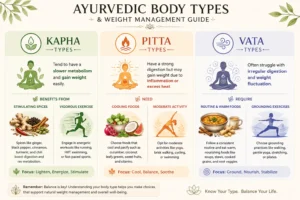
Ignoring these distinctions is one of the primary Ayurvedic approaches to fat loss myths. For example, a Vata type doing a heavy Kapha-reducing cleanse might become anxious and lose too much weight, while a Kapha type eating a Vata-balancing diet might not see any change in body composition.
Debunking Common Weight Loss Myths with Ayurveda
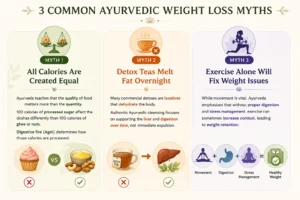
Many beliefs surrounding fat loss are simply incorrect when viewed through a holistic lens. Debunking common weight loss myths with Ayurveda reveals that health is multifaceted.
Myth 1: All Calories Are Created Equal Ayurveda teaches that the quality of food matters more than the quantity. 100 calories of processed sugar affect the doshas differently than 100 calories of ghee or nuts. Digestive fire (Agni) determines how those calories are processed.
Myth 2: Detox Teas Melt Fat Overnight Many commercial detoxes are laxatives that dehydrate the body. Authentic Ayurvedic cleansing focuses on supporting the liver and digestion over time, not immediate expulsion.
Myth 3: Exercise Alone Will Fix Weight Issues While movement is vital, Ayurveda emphasizes that without proper digestion and stress management, exercise can sometimes increase cortisol, leading to weight retention.
For those interested in the scientific overlap between traditional practices and modern health data, the National Center for Complementary and Integrative Health provides valuable insights. You can explore their resources on Ayurvedic Medicine to understand how these practices are viewed in contemporary research. Additionally, understanding the broader context of weight issues in America is essential; the CDC’s Adult Obesity Facts page offers current statistics that underscore why new approaches are necessary.
Holistic Ayurvedic Tips for Natural Weight Management
Ready to move away from restrictive dieting? Here is a step-by-step guide to integrating these principles into your daily life. These holistic ayurvedic tips for natural weight management focus on lifestyle rather than just food.
- Identify Your Dominant Dosha: Take an online quiz or consult a practitioner to understand if you are Vata, Pitta, or Kapha dominant.
- Eat According to Your Agni: Only eat when you are truly hungry. If your digestion is weak, opt for warm, cooked meals rather than cold salads.
- Prioritize Sleep: In Ayurveda, sleeping before 10 PM is crucial for hormonal balance and weight regulation.
- Incorporate Digestive Spices: Use ginger, cumin, and fennel to boost metabolism naturally without stimulants.
- Practice Mindful Eating: Eliminate distractions during meals. Chew thoroughly and appreciate the taste to signal satiety to the brain.
- Manage Stress: High stress aggravates Vata and Pitta, leading to cravings. Incorporate meditation or pranayama (breathwork) daily.
By following an Ayurvedic approach to weight loss, you shift the goal from “losing weight” to “gaining health.” This subtle shift reduces anxiety and promotes consistency.
Navigating the world of diet culture can be exhausting, but ancient wisdom offers a refreshing alternative. By debunking common weight loss myths with Ayurveda, we see that weight management is not about punishment, but about balance. Whether you are dealing with a slow Kapha metabolism or a erratic Vata digestion, there is a path tailored for you. Embrace these holistic ayurvedic tips for natural weight management to build a healthier relationship with your body and food that lasts a lifetime.
FAQs
1. Can Ayurveda help with quick weight loss?
Ayurveda is not designed for quick fixes. It focuses on sustainable, gradual changes that align with your body type. Rapid weight loss is often discouraged as it can aggravate Vata dosha and lead to instability.
2. Do I need to become a vegetarian to follow Ayurvedic weight loss?
No. While Ayurveda emphasizes plant-based foods, it does not strictly require vegetarianism for weight loss. The focus is on the quality, preparation, and compatibility of food with your dosha.
3. How long does it take to see results with an Ayurvedic approach?
Results vary by individual. Some people feel digestive improvements within a week, while visible weight changes may take a few months of consistent lifestyle adherence.
4. Is it safe to combine Ayurvedic herbs with modern medication?
Always consult with a healthcare provider before combining herbs with prescription medication. Some Ayurvedic herbs can interact with pharmaceutical drugs, so professional guidance is essential.