



How to Remove Sun Tan Naturally
A day spent outdoors often leaves behind more than just good memories. That uneven, darker layer on your skin is a sun tan, and it forms when your skin works overtime to shield itself from the sun’s energy. Many people today are moving away from chemical based creams and instead turning to their kitchen shelves for solutions. Natural remedies offer a gentle, affordable, and chemical free path to restoring your original skin tone. This guide walks you through ten trusted home methods that actually work, along with a clear comparison to help you choose wisely.
Why Sun Tan Happens
Your skin does not tan for no reason. When ultraviolet rays hit your skin, your body responds by producing a pigment called melanin. This is not a cosmetic choice. It is your skin trying to build a defense shield. The more time you spend under strong sunlight, the more melanin builds up, and the darker your tan becomes. Unlike a sunburn which is immediate damage, a tan is a slower accumulation of this pigment. Over many weeks or months of regular sun exposure, the tan settles deep into your outer skin layers, making it harder to fade without consistent care.
What You Need Before You Start
Before applying anything to your skin, take a few minutes to gather your supplies. You will not need any special equipment. A small ceramic or glass bowl works better than plastic for mixing. A clean cotton cloth or a soft makeup brush helps with even application. For measuring, a standard kitchen spoon is enough. Always wash your hands before preparing any mixture, and make sure the area of skin you plan to treat is clean and dry. If you have very sensitive skin, test any remedy on a small patch behind your ear or on your inner arm first.
Comparison Table of Natural Tan Removal Methods
This table gives you a side by side look at all ten remedies. Use it to find what fits your skin type and daily routine.
| Method | Main Action | Skin Feel During Use | Ideal Skin Type | Time Needed | Weekly Use |
|---|---|---|---|---|---|
| Lemon Juice | Lightening and peeling | Tingling, slightly dry | Oily, non sensitive | 10 minutes | 2 times |
| Aloe Vera Gel | Cooling and repairing | Cooling, smooth | Any, especially sensitive | 30 minutes | 4 to 5 times |
| Cucumber | Calming and hydrating | Cold, wet, refreshing | All types | 15 minutes | 3 times |
| Yogurt | Gentle resurfacing | Thick, creamy | Dry or normal | 20 minutes | 3 times |
| Honey | Deep moisturizing | Sticky, warm | Dry or mature | 30 minutes | 3 times |
| Tomato | Antioxidant brightening | Wet, slightly acidic | Oily or combination | 15 to 20 minutes | 3 times |
| Papaya | Enzyme peeling | Soft, pulpy | Sensitive or aging | 30 minutes | 2 times |
| Turmeric | Evening out tone | Gritty, staining | Dull or uneven | 15 to 20 minutes | 2 times |
| Gram Flour | Scrubbing and oil control | Thick paste, drying | Oily or mixed | Until dry (about 15 min) | 2 times |
| Oatmeal | Soft exfoliation | Mildly scratchy | Easily irritated | 20 minutes | 2 to 3 times |
Detailed Methods for Each Remedy
Lemon Juice

Squeeze half a fresh lemon into a small cup. Dip a cotton ball into the juice and dab it directly onto the darker areas of your tan. Do not rub hard. Let the juice sit for no more than ten minutes. You may feel a slight tingle, which is normal. If you feel a strong burn, wash it off immediately. After ten minutes, rinse with cool water and pat your skin dry. Do not step into sunlight for at least two hours after using lemon, as your skin becomes extra sensitive to UV rays.
Aloe Vera Gel
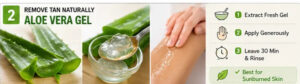
Break off a thick leaf from an aloe plant if you have one. Slice it open lengthwise and scoop out the clear gel with a spoon. Spread this gel generously over your tanned skin. Unlike other remedies, you can leave aloe on for a full 30 minutes without worry. The gel will absorb partly into your skin. When time is up, rinse with plain water. For best results, use fresh aloe rather than bottled versions that contain preservatives and alcohol.
Cucumber
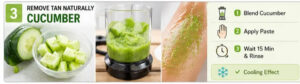
Take half a cucumber and chop it into small chunks. Blend these pieces into a fine paste without adding water. Strain the paste through a thin cloth if you want only the juice, or keep the pulp for a thicker mask. Spread the paste evenly over your tan. Relax for 15 minutes. The coolness should feel pleasant against your skin. Rinse off with water that is slightly cooler than room temperature. This method is especially helpful if your skin feels hot or irritated from recent sun exposure.
Yogurt
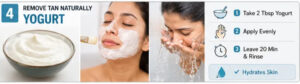
Use plain yogurt with no added sugar, flavors, or colors. Full fat yogurt works better than low fat because the fats help keep your skin from drying out. Take two tablespoons of yogurt and stir it until smooth. Apply a medium thick layer over your tan. Let it sit for 20 minutes. You will notice the yogurt starting to dry and crack slightly. That is a sign it is working. Rinse off with lukewarm water while gently rubbing in circles with your fingertips.
Honey

Warm one tablespoon of honey by placing the jar in a bowl of warm water for a minute. Do not microwave honey as it can destroy some of its natural properties. Once warm and runny, spread it thinly over your tanned areas. Honey is sticky, so be careful not to touch your hair or clothes. Leave it on for a full 30 minutes. When rinsing, use warm water and your fingers to gently break down the honey layer. Your skin will feel very soft afterward because honey pulls moisture into the outer skin layer.
Tomato

Pick a ripe tomato that gives slightly when squeezed. Mash it completely in a bowl until you have a chunky pulp. If you prefer a smoother texture, press the pulp through a sieve. Apply this red pulp onto your tan. The juice may drip, so lean over a sink or apply while sitting in a bath. Wait 15 to 20 minutes. Rinse off with cold water. Tomato works best for tans on your arms, legs, and back. For facial tans, tomato can be too acidic for some people, so start with a shorter time.
Papaya

Use a piece of ripe papaya that is soft and orange inside. Remove the seeds and mash the flesh with a fork until it turns into a paste. Unlike other fruits, papaya does not need to be blended. Spread this paste over your tan. The natural enzymes in papaya gently eat away dead skin cells without scratching. Leave it for 30 minutes. Rinse with cool water. You will notice your skin looks slightly brighter after just one use, though a deeper tan may need several applications.
Turmeric

Mix one teaspoon of bright yellow turmeric powder with two teaspoons of plain yogurt. Stir until the color is uniform. Apply this mixture only to the tanned areas, not your whole face or body. Turmeric is famous for staining, so wear old clothes and use a towel you do not mind turning yellow. Leave the paste on for 15 to 20 minutes. When rinsing, use cold water and a soft cloth to wipe off the yellow residue. Any remaining stain on your skin will fade within a few hours.
Gram Flour
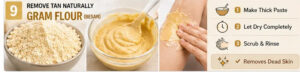
Take two tablespoons of gram flour, also called besan in many stores. Add just enough water to make a stiff paste. You want it thick enough to stay in place without dripping. Spread this paste over your tan and wait for it to dry completely. You will know it is ready when the surface cracks when you move your face or arm. Once dry, wet your fingers and scrub the paste off in small circular motions. The flour acts like fine sandpaper, lifting away tan along with dead skin. Rinse well afterward.
Oatmeal

Grind plain rolled oats in a blender until they turn into a fine powder. Do not use instant oatmeal packets that have sugar or flavors. Mix two tablespoons of this oat powder with enough plain yogurt or milk to form a spreadable paste. Apply to your tanned skin. Wait 20 minutes. As you rinse, use gentle circular rubbing motions. The oatmeal grains will feel soft, not harsh. This method is ideal if other scrubs have irritated your skin in the past.
How Much to Use and How Long to Wait
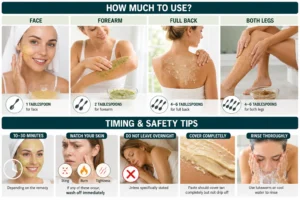
For your face, one tablespoon of any single ingredient is usually enough. For a forearm, use two tablespoons. For your entire back or both legs, you may need four to six tablespoons. As a general rule, the paste should cover the tan completely but not drip off. The timing ranges from 10 to 30 minutes depending on the remedy. If your skin starts to sting, burn, or feel uncomfortably tight before the time is up, wash it off immediately. Never leave any natural mixture on your skin overnight unless specifically stated.
Answers to Common Questions
How many times per week should I use these?
Use any of these remedies two to three times each week. Once your tan has faded noticeably, reduce to once a week for maintenance.
Can someone with very dark skin use these?
Yes, these methods work on all skin tones. The goal is to remove the excess tan, not to permanently lighten your natural skin color. If you have a deeper natural complexion, you may need to use the remedies longer to see a difference.
What if I see no change after two weeks?
Tans that have built up over many months or years take longer to fade. Increase your frequency to three times per week for another two weeks. If you still see no change, try a different remedy from the table. Not every method works the same for every person.
Is it safe to mix two remedies together?
Yes, some combinations work very well. Honey and lemon is a classic pair. Yogurt and turmeric is another. However, do not mix more than two at once. Too many active ingredients can overwhelm your skin and cause irritation.
Can I use these on my children?
For children under 12, stick to the gentlest options: cucumber, aloe vera, and yogurt. Avoid lemon juice and turmeric on young skin. Always do a patch test first and reduce the recommended time by half.
Should I exfoliate before applying these remedies?
No. These remedies themselves provide exfoliation. Scrubbing your skin first and then applying these masks can lead to over exfoliation, which leaves your skin red and sensitive.
What time of day works best?
Evening is ideal. You apply the remedy, rinse it off, and then go to sleep. This gives your skin many hours to recover before any sun exposure the next day. If you must use a remedy in the morning, apply sunscreen afterward without fail.
Can I store leftover mixture for later?
No. Fresh ingredients lose their active properties within a few hours. Lemon juice oxidizes, yogurt sours, and fruits ferment. Always make a fresh batch each time you treat your skin.
Will these remedies work on tan lines from clothing?
Yes, tan lines respond very well to natural remedies. Apply the paste precisely along the line where the tan begins. Be careful not to spread it onto the untanned skin, or you may create uneven results.
What if my skin feels dry after using these?
Some remedies, especially lemon juice and gram flour, can pull moisture out of your skin. Apply a plain moisturizer or a few drops of coconut oil after rinsing. Avoid any moisturizer with fragrance or alcohol immediately after treatment.
Final Advice for Lasting Results
Removing a sun tan naturally requires patience and consistency. No single application will erase weeks or months of sun exposure. Pick two remedies from the comparison table, use them alternately for three weeks, and track your progress with photos taken in the same lighting. While you work on fading your current tan, start protecting your skin to prevent a new one. A wide brimmed hat, shade during midday hours, and sunscreen on exposed skin will save you from repeating the cycle. Your skin will thank you with an even, natural glow that comes from health, not from hiding damage.