

A New Day on Willow Street
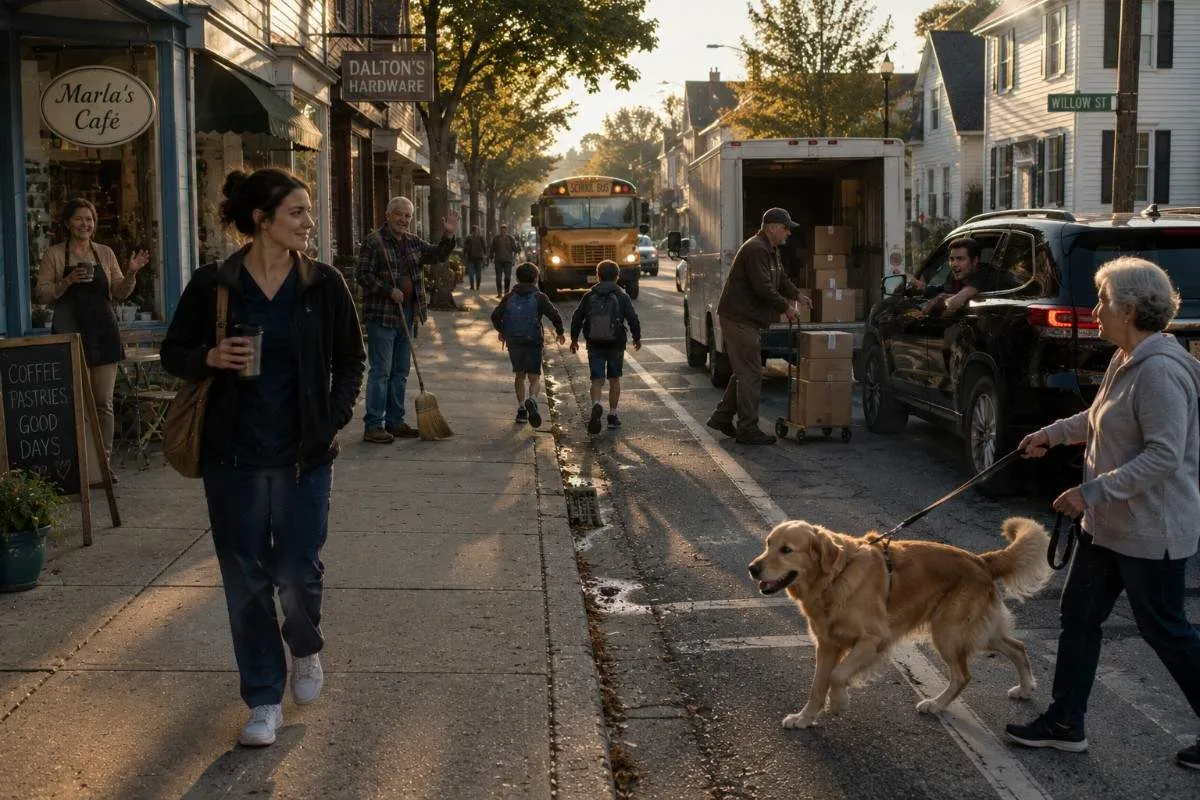
The sun had yet to fully rise when life on Willow Street began to stir. It was this type of neighborhood where some mornings felt like everyone had to move just a bit faster or something, but also local and warm-the type of monotonous routine everyone silently appeared accustomed to with one another. The cold air brought the fresh coffee smell from Marla’s Café at the corner and mingled it with a delicate scent of pine trees that grew along the curved walkways.
Emma Carter emerged from her tiny townhouse, a travel mug in one hand and her bag in the other. She was a nurse at St. Mary’s Hospital and had to be on duty at eight, but she always left a little early. She sat there not because she had time to kill, but because she liked to see the neighborhood wake up. It was comforting in a quiet sort of way, that letter, a feeling of connection.
Mr. Dalton was sweeping the front of his hardware store across the street. In his late sixties, he wore a flannel shirt in any season. As Emma walked by, he waved to her. She smiled and raised her mug in salutation.
“Another early one, Emma,” he laughed.
“You know me,” she replied. “I like to see who’s winning the morning race.”
“Take a guess,” he said, looking down the street. “I’m going with the Parker twins, again.”
Right on cue emerged two boys from their house in a mad dash, backpacks half-zipped and hair in all directions. Their mother had been standing at the door screaming something about lunch boxes forgotten, but the twins were already racing each other down the block in pursuit of the school bus stop.
Emma laughed and continued walking. She adored moments like that, the little shards of normal life that reminded her why she loved this town.
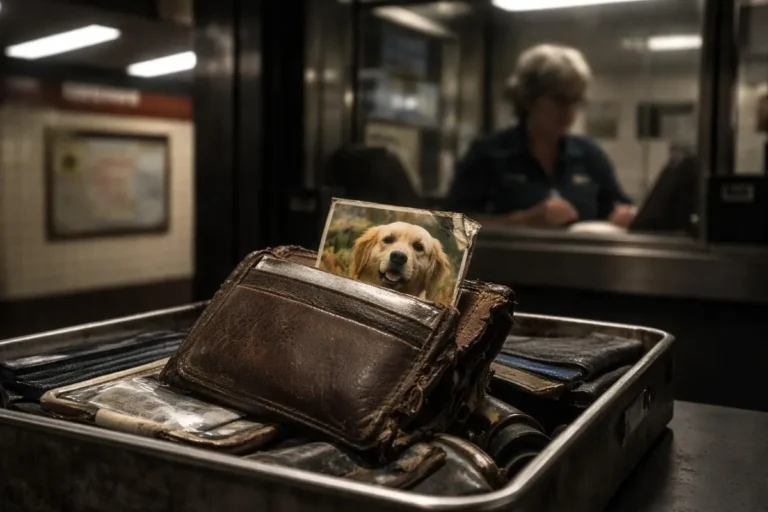
Further ahead to the right, a dog barked furiously. It was Milo, the golden retriever that belonged to Mrs. Raymond. The dog was straining at the leash to meet-and-greet anyone he encountered. Mrs. Raymond shook her head, following as best she could his enthusiasm.
“Good morning, Emma,” she said. “Milo is insistent that he gets his walk at the same time every day.
“He just likes to inspect his land,” Emma quipped, bending down to scratch Milo behind the ears.
Before she could stroll off, a car horn squawked at the intersection. A delivery truck had halted smack in the middle of a street, and there was a black SUV behind it. The conductor, a young man in a suit, had stuck out of his window, clearly irritated.
“Come on, I’m going to be late!” he shouted.
The delivery man, an older fellow with a peaceful face, waved in apology as he struggled to lower off a stack of boxes. There was always some sort of low-level mayhem on Willow Street in the mornings, but nobody got mad for very long.
Emma arrived at the bus stop, where three high schoolers clung to one another and groused about a math test. She knew them, but not their names. They nodded politely to her as she passed.
She turned the corner and into Marla’s Café. It was crowded, but it always was this time of day. Behind the counter was Marla herself: a bundle of energy and warmth.
“Emma! You’re a bit early today,” Marla said, serving her a hot pastry without having to read pursuit.
“I’m trying to be productive,” Emma said with a smile.
“And you ’ re always productive. That hospital would fall apart without you.” Emma shook her head, embarrassed by the compliment, but she smiled anyway. She sat near the window for a few minutes before the bossy lady behind the counter called her next customer. The street outside moved. More cars rolled by, more people hurried to work, more children skipped toward school. Willow Street, in all its small-town ebb and flow, felt alive and familiar, much like the locals picnicking in the corner. Every corner had a face she recognized, every building held memories and every morning carried a routine that felt like home. After she finished her pastry, she threw the wrapper away and waved goodbye to the old lady baking more behind the counter. It only took her a few moments to get to the bus stop, but a few more passed before the next familiar figure approached. “Morning, Emma,” said Tom Reyes, who had been delivering mail on Willow Street for almost twenty years. “Busy day ahead?” “Same as always,” she told him. “You?” He lifted his bag slightly. “Rain or shine, mail doesn’t wait.” They both laughed. The bus huffed up then, its brakes hissing, and she took one last glance at the street before she stepped on. A new mother pushed a stroller. A cyclist pedaled by, late for work. A teenager, on the other edge, struggled to carry a skateboard and a cup of iced coffee at the same time. Milo barked from another window, still puzzled by something only he knew, and it was all ordinary. It was plain people, getting about their day to make Emma’s day feel more regular.
She smiled to herself as the bus departed & she sipped her coffee. It was another day on Willow Street, with its cacophony and laughter, its small aggravations, its sense of sameness. And it was the finest way, she thought, to start in the morning.